Effect of temperature difference on pressure loss
District heating network, part 4: how the temperature difference affects the pressure loss in the network
Overview ▶ 0:11
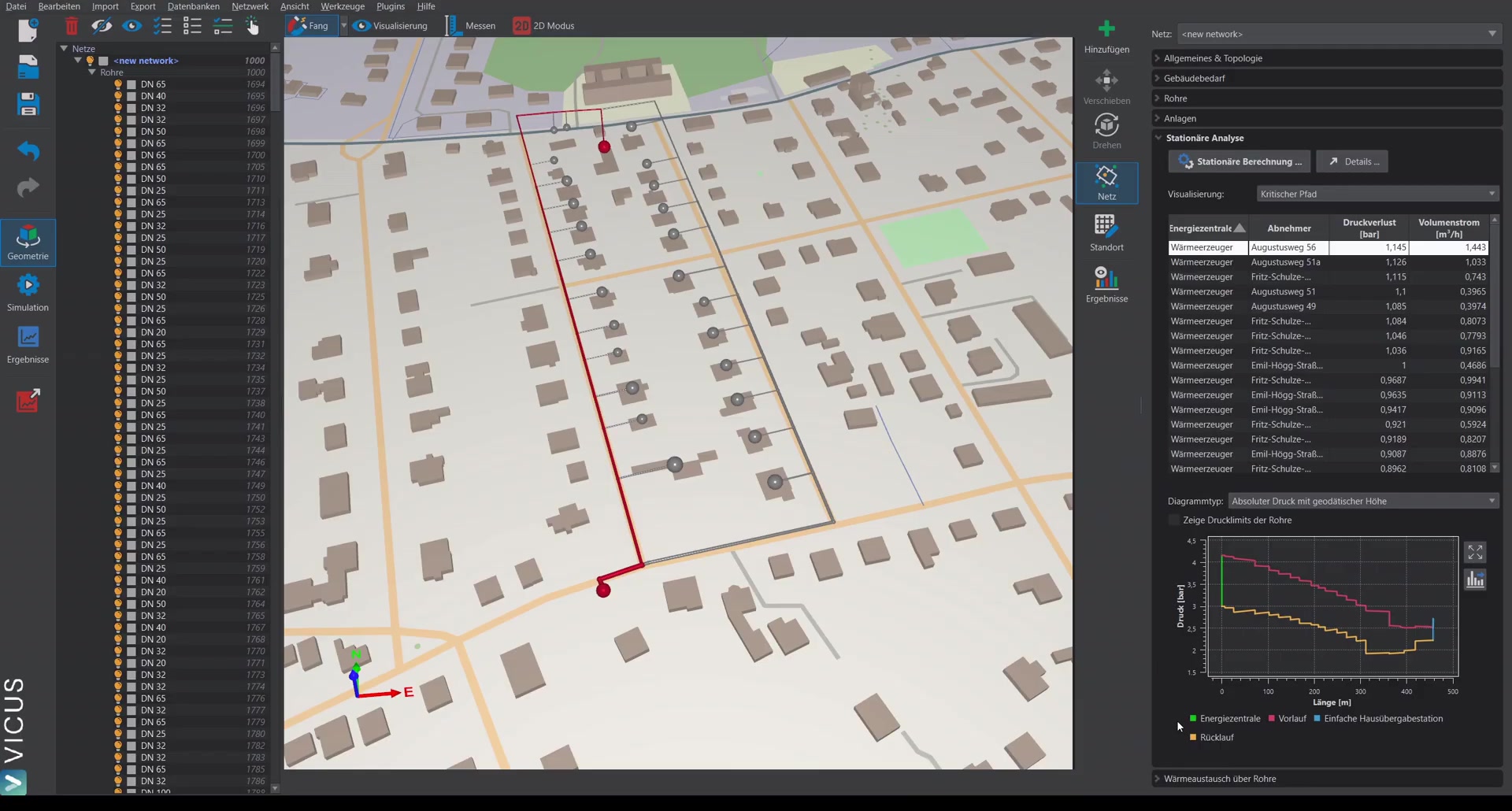
This tutorial examines the relationship between temperature spread and pressure loss in the network. What happens when the temperature spread is changed? What must be considered, and how must the pump be set correctly?
Starting situation: 20 Kelvin spread ▶ 0:39
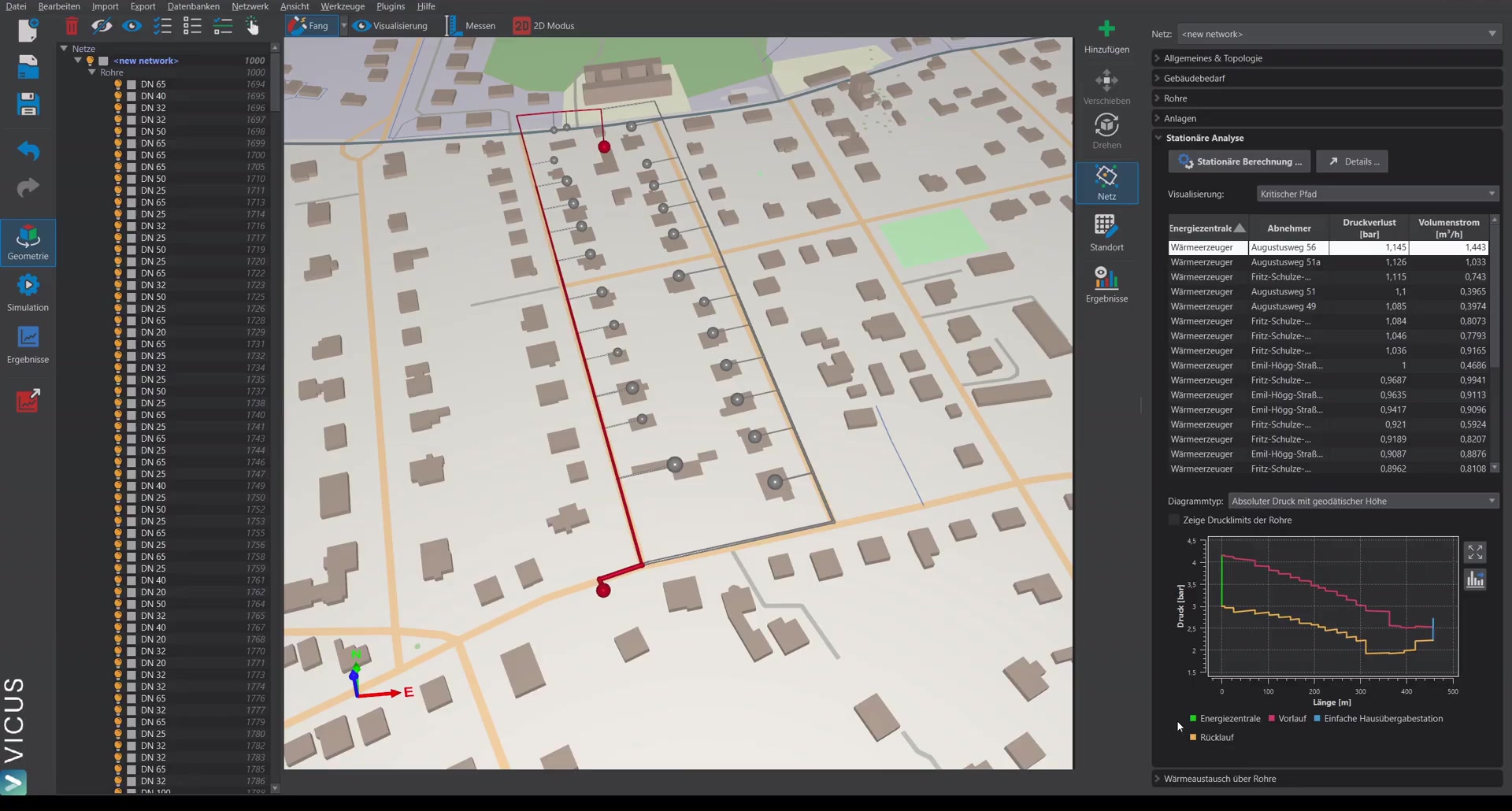
In the previous tutorial, the heat network was operated with a 20 Kelvin spread. The steady-state calculation produces a pressure loss at the worst point of 1.145 bar. Pump sizing shows the steady-state curve with this pressure loss, and a suitable pump has been assigned accordingly.
Checking the simulation results ▶ 1:33
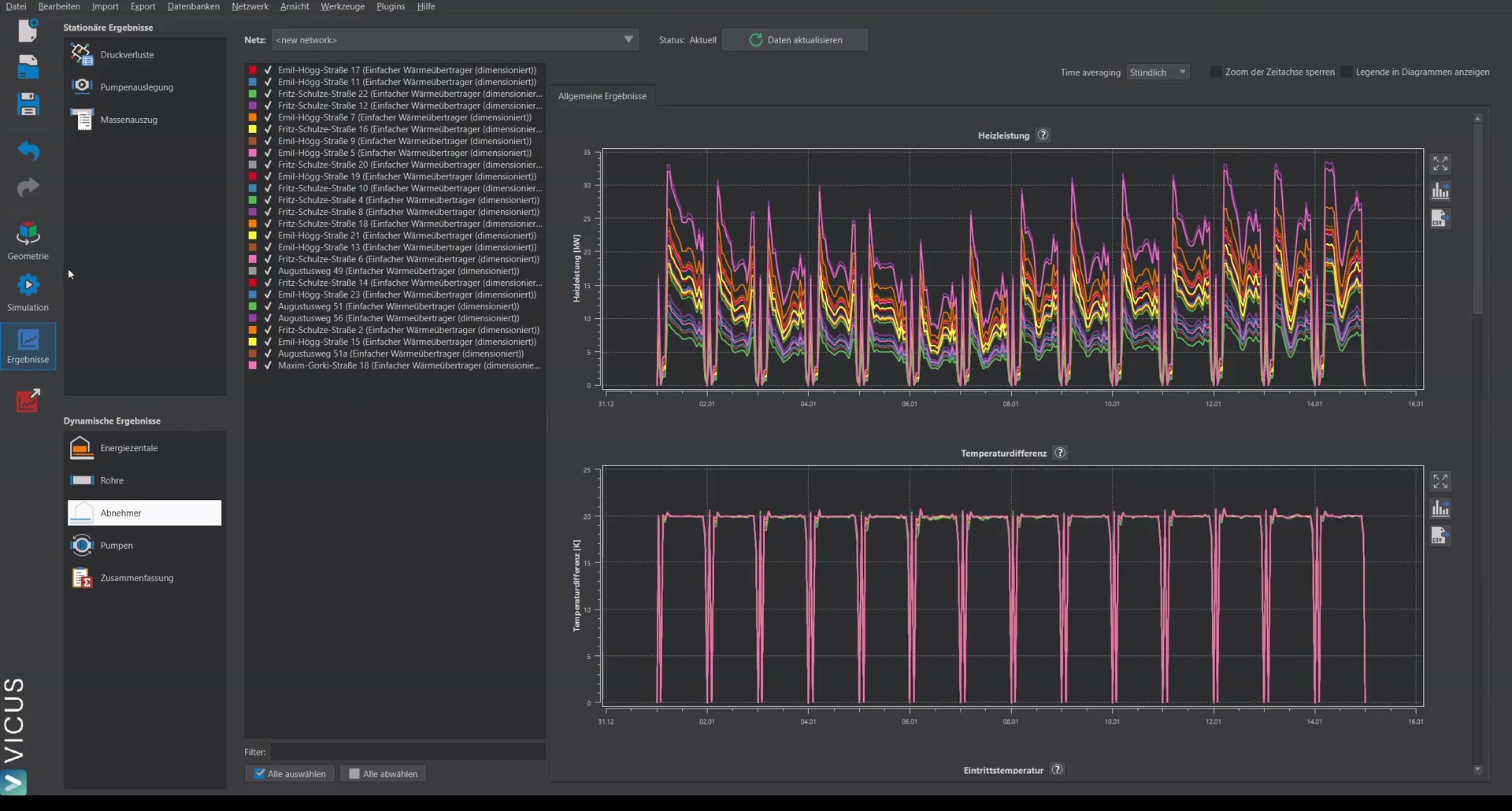
In the results under Consumers, it can be seen that the desired 20 Kelvin temperature difference is actually maintained at every moment of heat extraction.
Changing the spread to 15 Kelvin ▶ 2:01
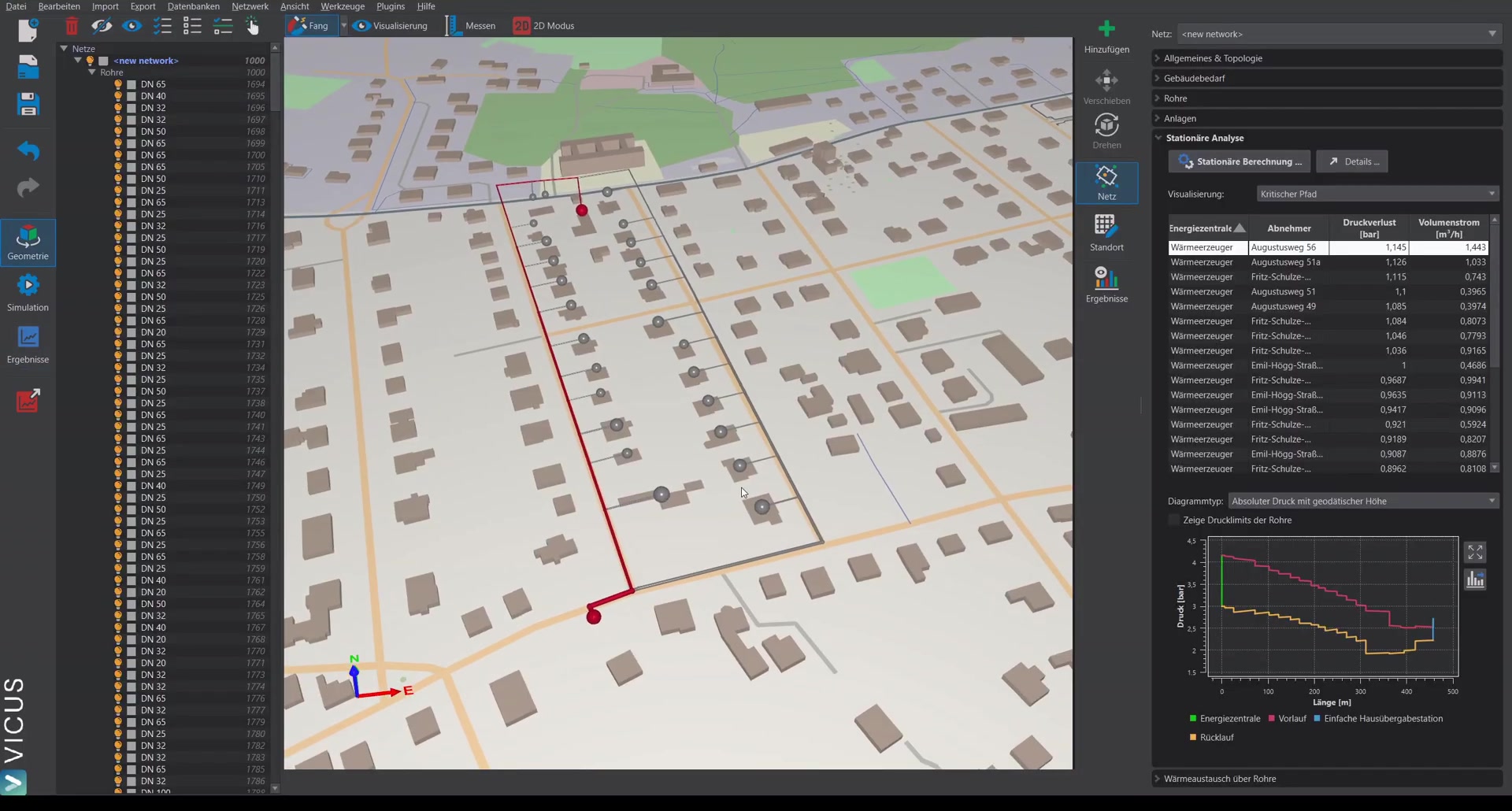
When changing the spread, two steps are necessary:
- In the steady-state calculation, set the spread to 15 Kelvin and recalculate. The pressure loss rises to 1.6 bar.
- In the systems, also set the control valve at the house transfer station to 15 Kelvin — this setting is configured there separately for the simulation.
Simulation with the wrong pump ▶ 2:48
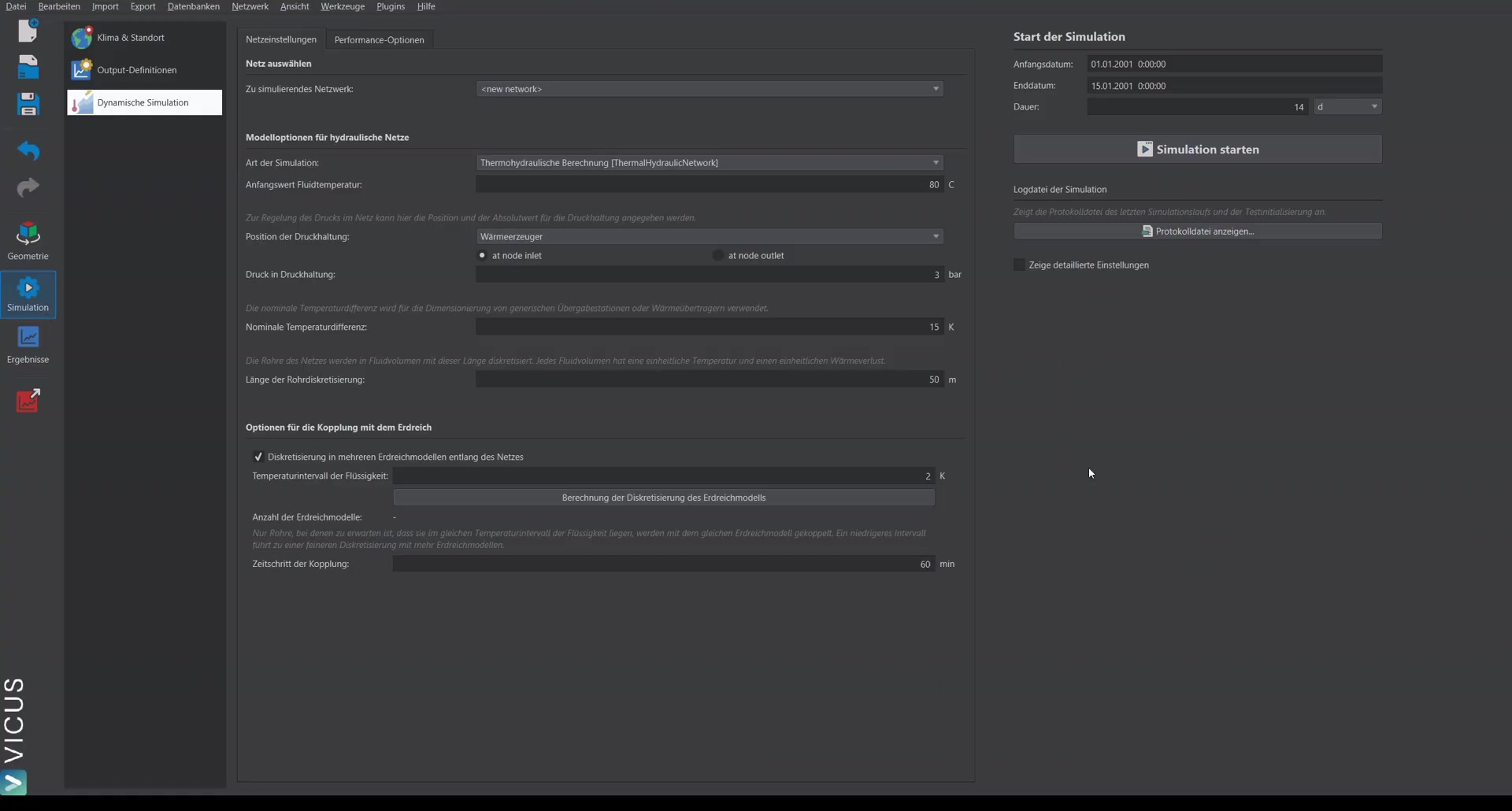
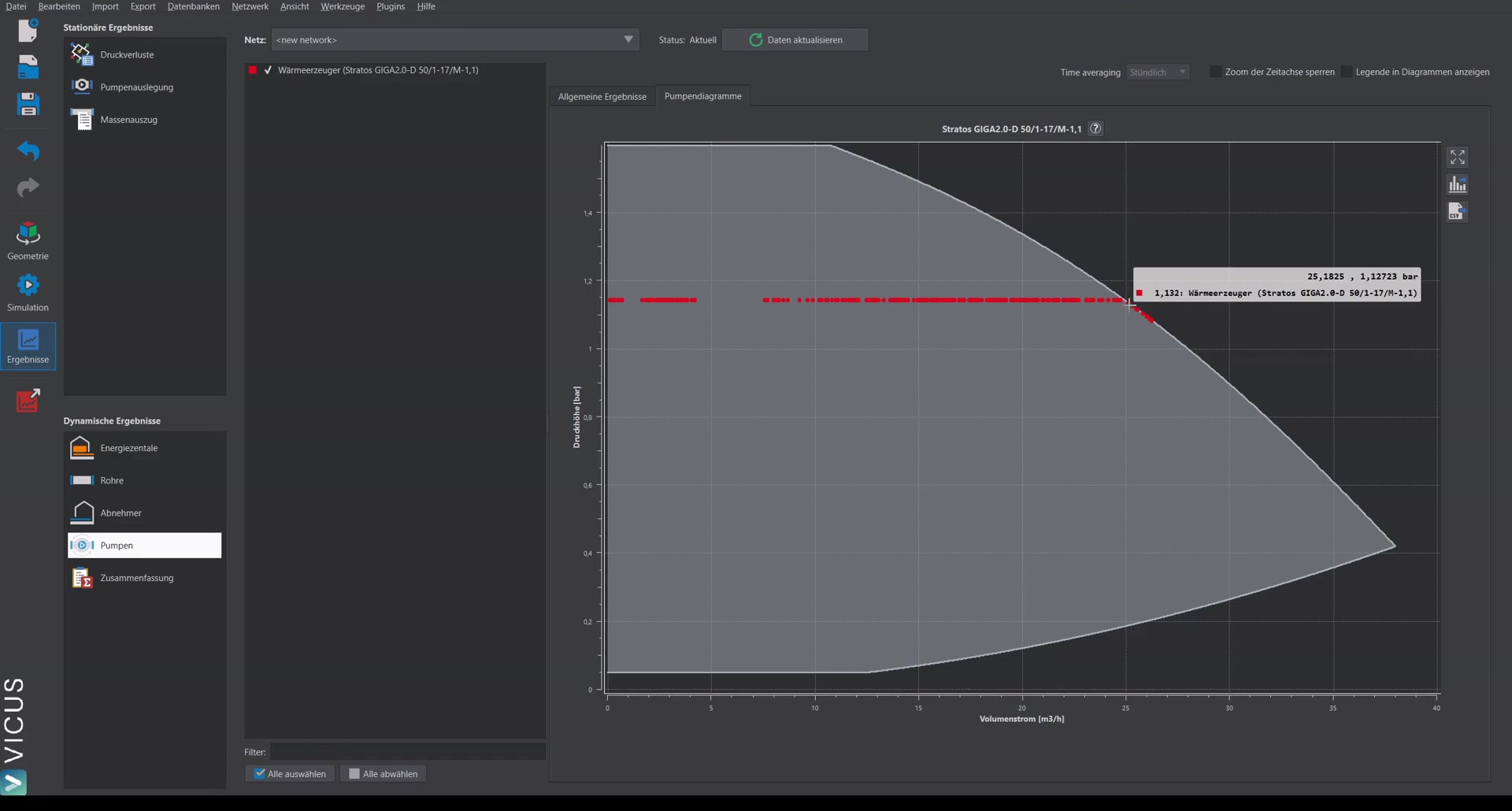
When simulating with the new spread but the old pump (sized for 1.1 bar), the problem becomes apparent: the spread is exceeded. The pressure difference has increased, but the pump is still set for the lower pressure difference. In the pump diagram, even the pump’s limit is reached — the curve bends off because the pump can no longer deliver more head.
Re-sizing the pump ▶ 4:12
To fix the problem:
- Switch to pump sizing again and refresh the steady-state calculation.
- Select a suitable pump from the database and assign it.
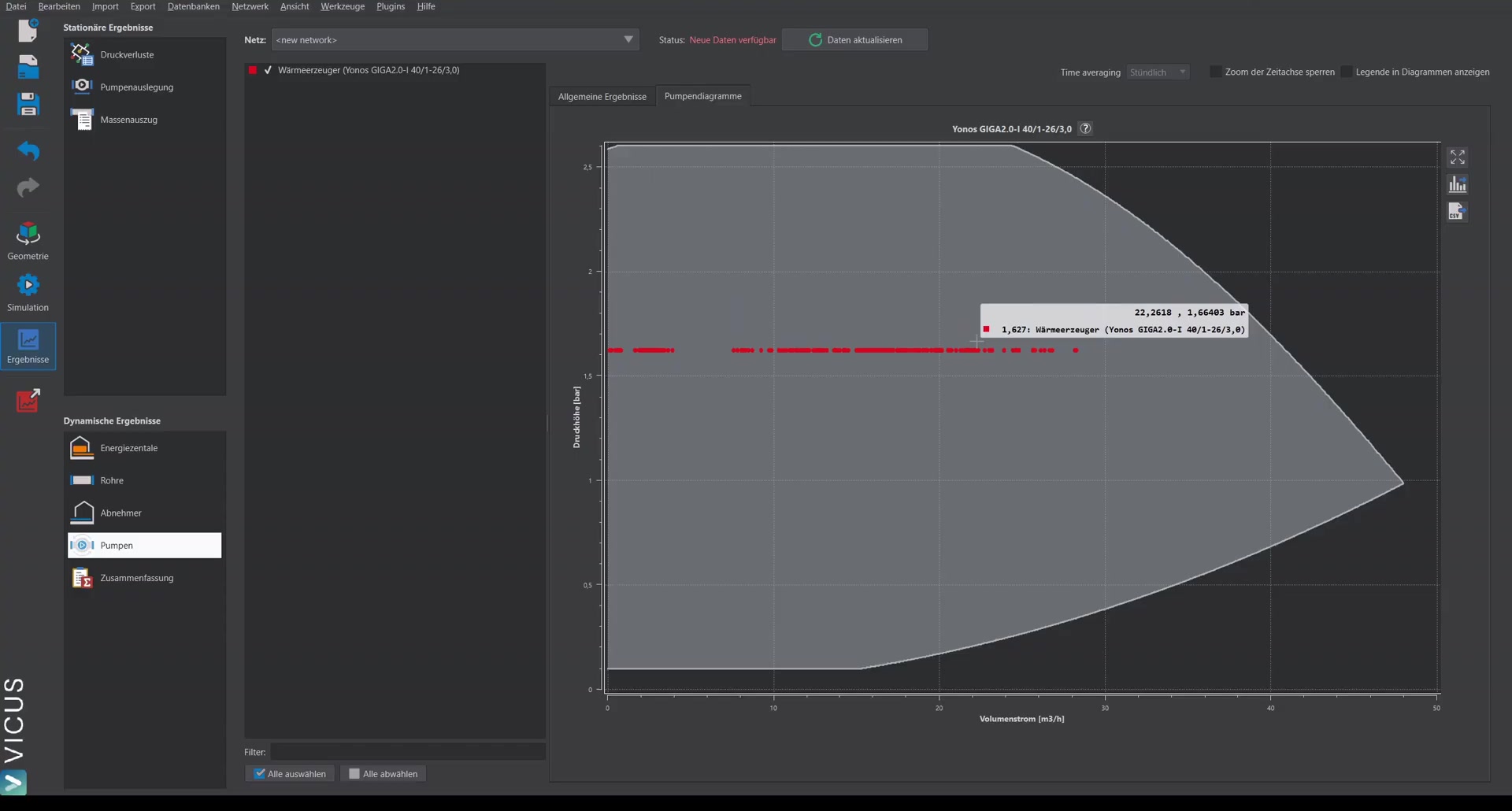
- The new pump now has the correct head of approximately 1.6 bar set.
Simulation with the correct pump ▶ 4:46
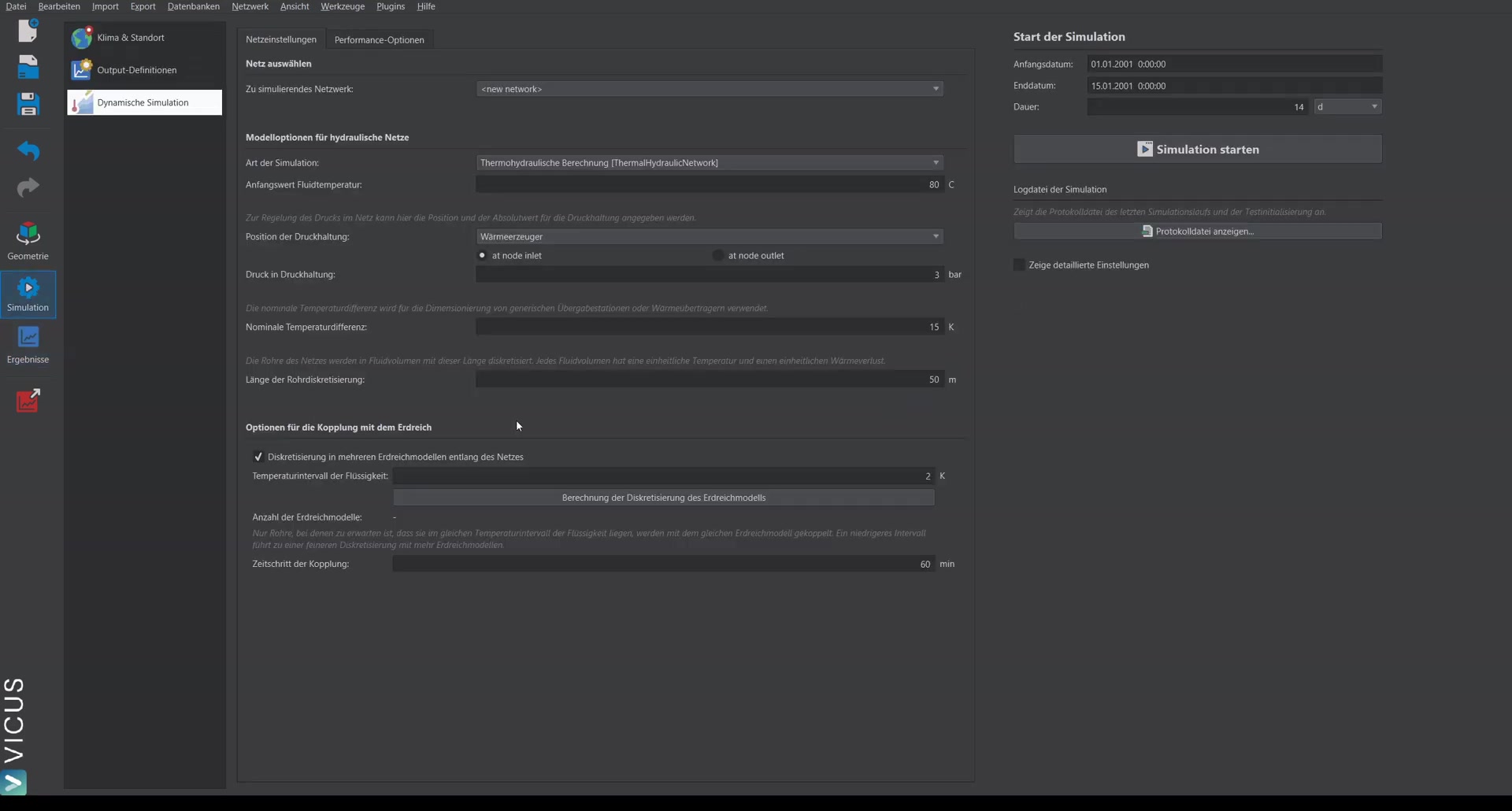
After restarting the simulation with the new pump, the 15 Kelvin temperature difference is correctly maintained again. In the pump diagram, all operating points move within the intended operating range.
Conclusion ▶ 5:39
When changing the temperature spread, you must always ensure that the pump is sized accordingly. A smaller spread leads to higher mass flows and therefore higher pressure losses in the network — the pump must provide correspondingly more head.