Simulate a passive network & check the hydraulics
Cold district heating, part 3: dynamic simulation of a passive network and verification of the hydraulics
Overview ▶ 0:11
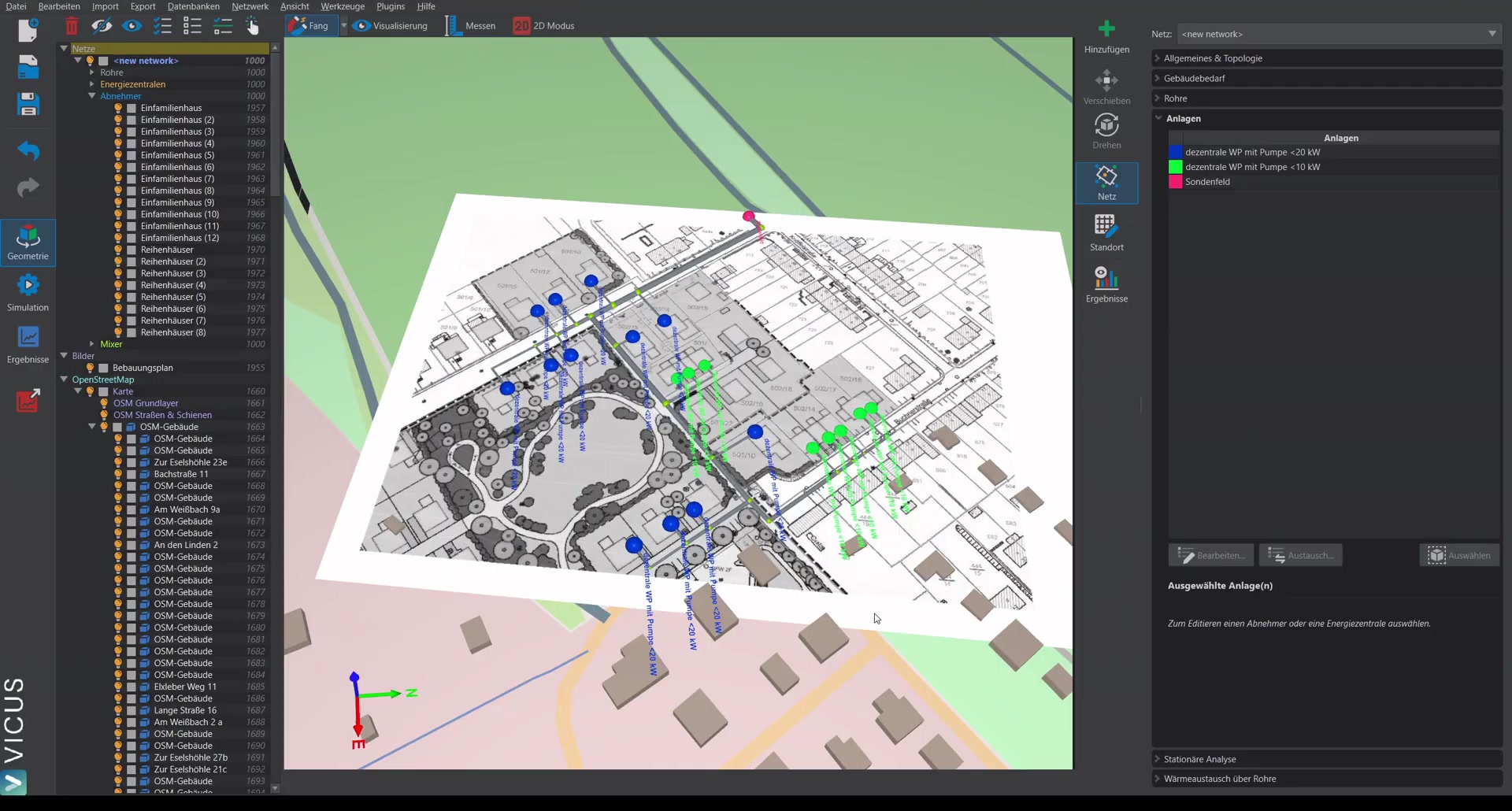
This third tutorial demonstrates how the hydraulic simulation of a passive cold district heating network works. It examines how the pressure losses affect pump control and whether the decentralized circulation pumps are sufficient to run the network.
Checking the decentralized heat pumps ▶ 0:30
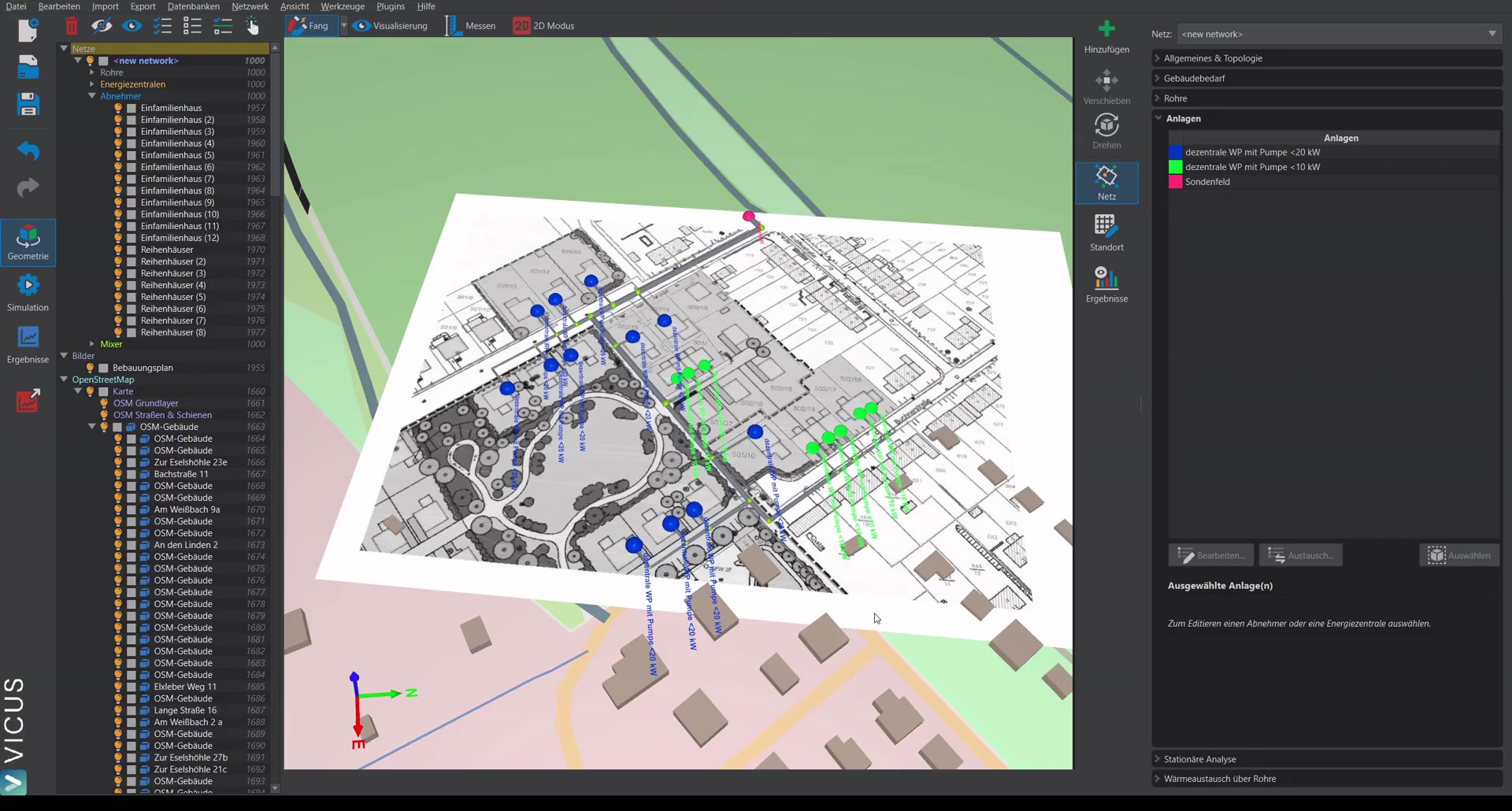
The hydraulic configuration of the decentralized heat pump consists of:
- Circulation pump: A controlled pump that regulates to a temperature difference of 3 Kelvin.
- Heat pump: Passively produces a pressure loss of 0.1 bar.
The volume flow and heating power of the heat pump are automatically set from the stored building data. The associated volume flow is calculated via the 3 Kelvin spread.
Running the simulation ▶ 1:52
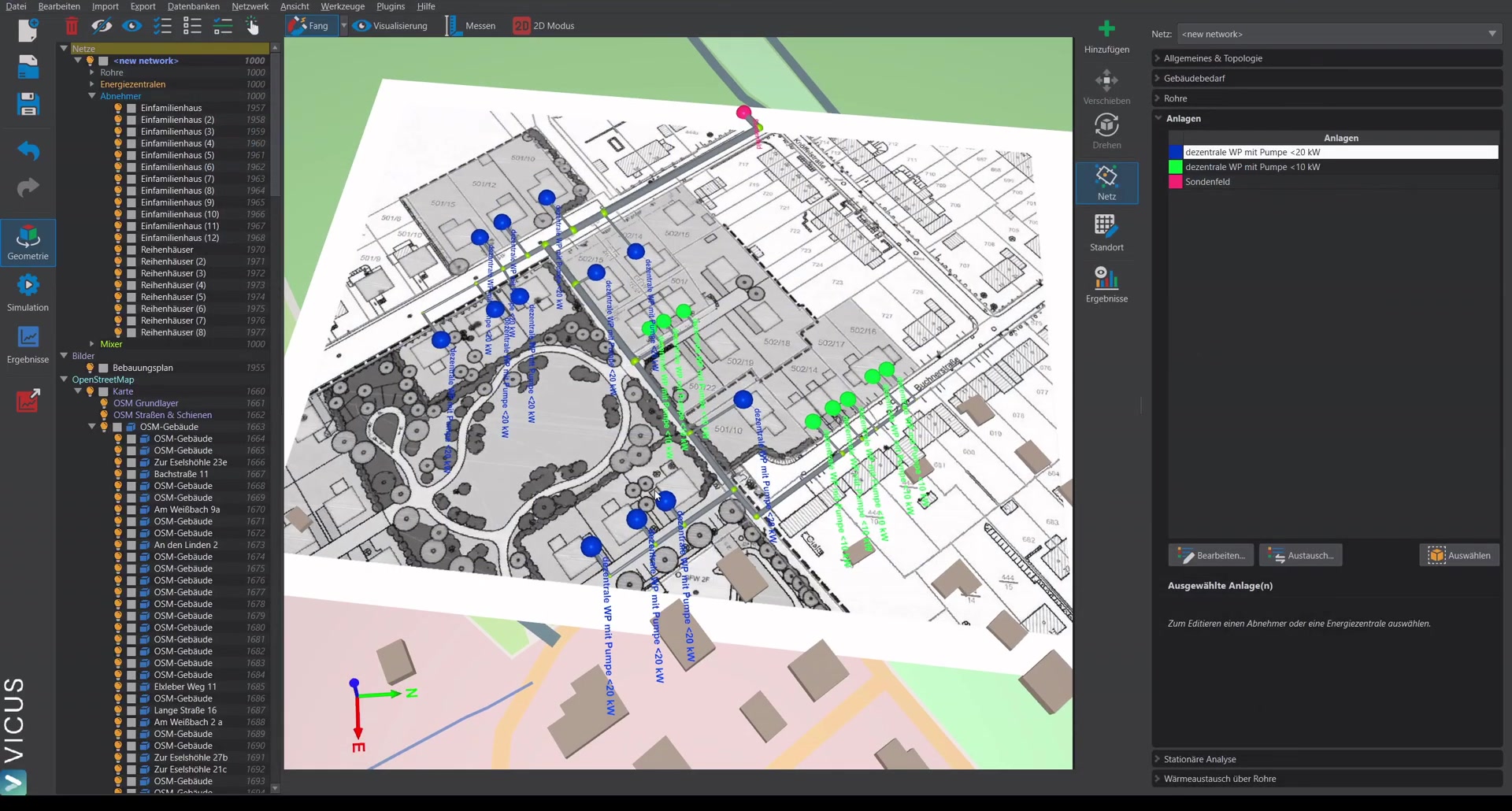
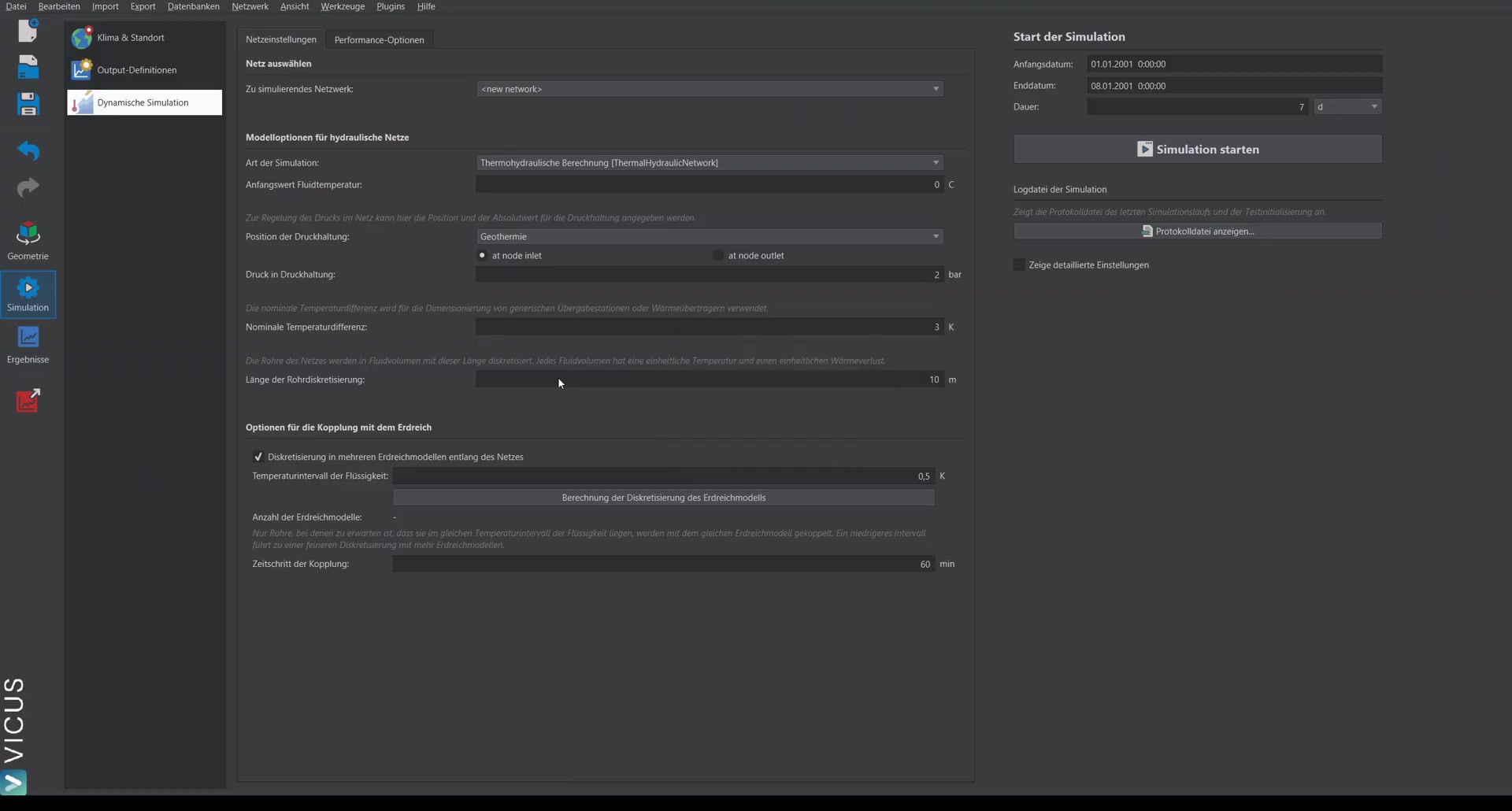
- Click Start simulation.
- For the first hydraulic check, a short simulation time of 7 days is sufficient.
- The goal is to check whether the circulation pumps are sufficient to circulate the network.
Evaluating the results ▶ 2:19
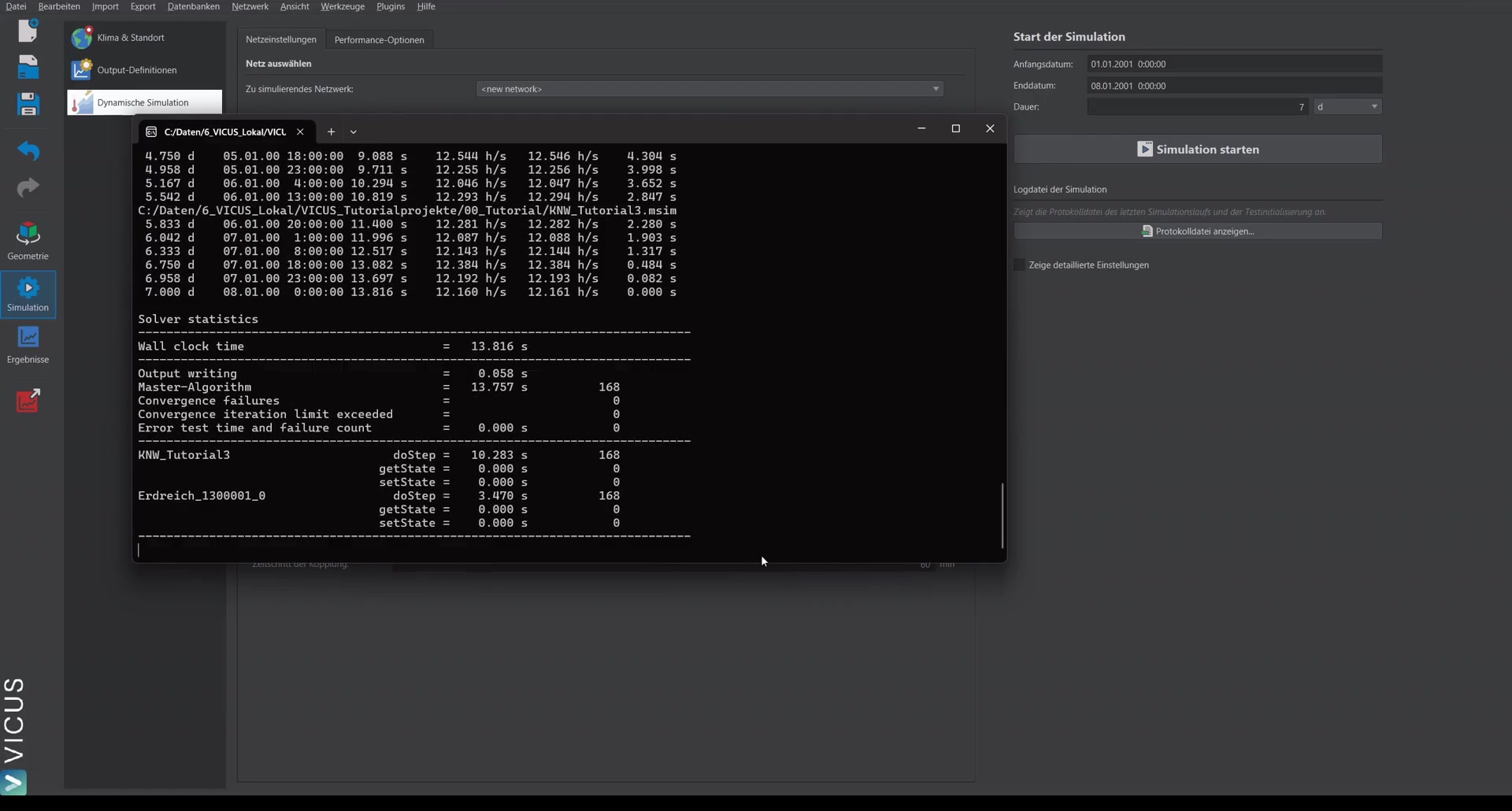
After the simulation, the following quantities are shown in results mode:
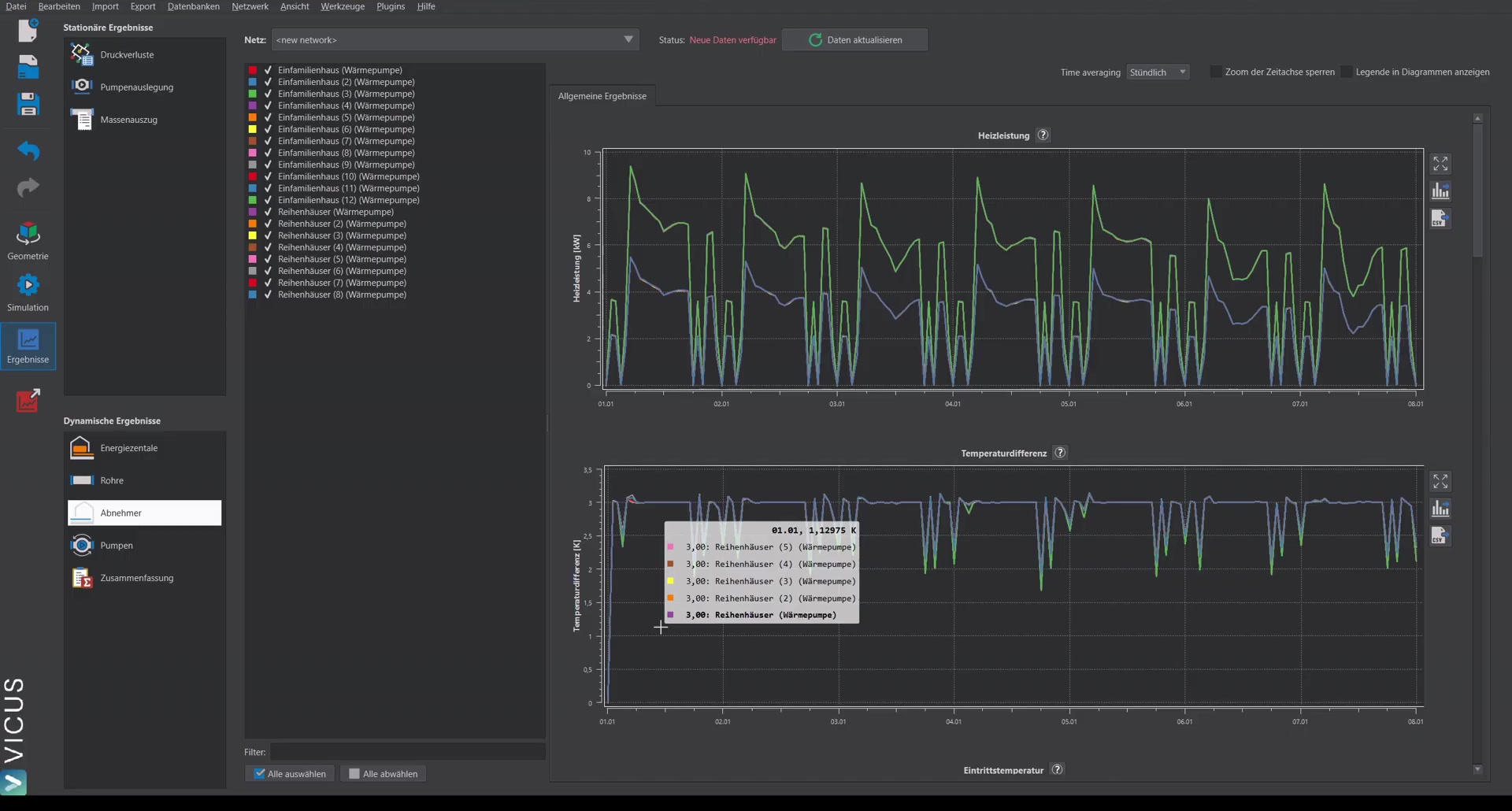
- Volume flow and pressure loss at the consumers
- COP of the heat pumps (varies depending on supply temperature and domestic hot-water operation)
- Temperature difference: Should meet the configured 3 Kelvin
Checking pump operating points ▶ 3:04
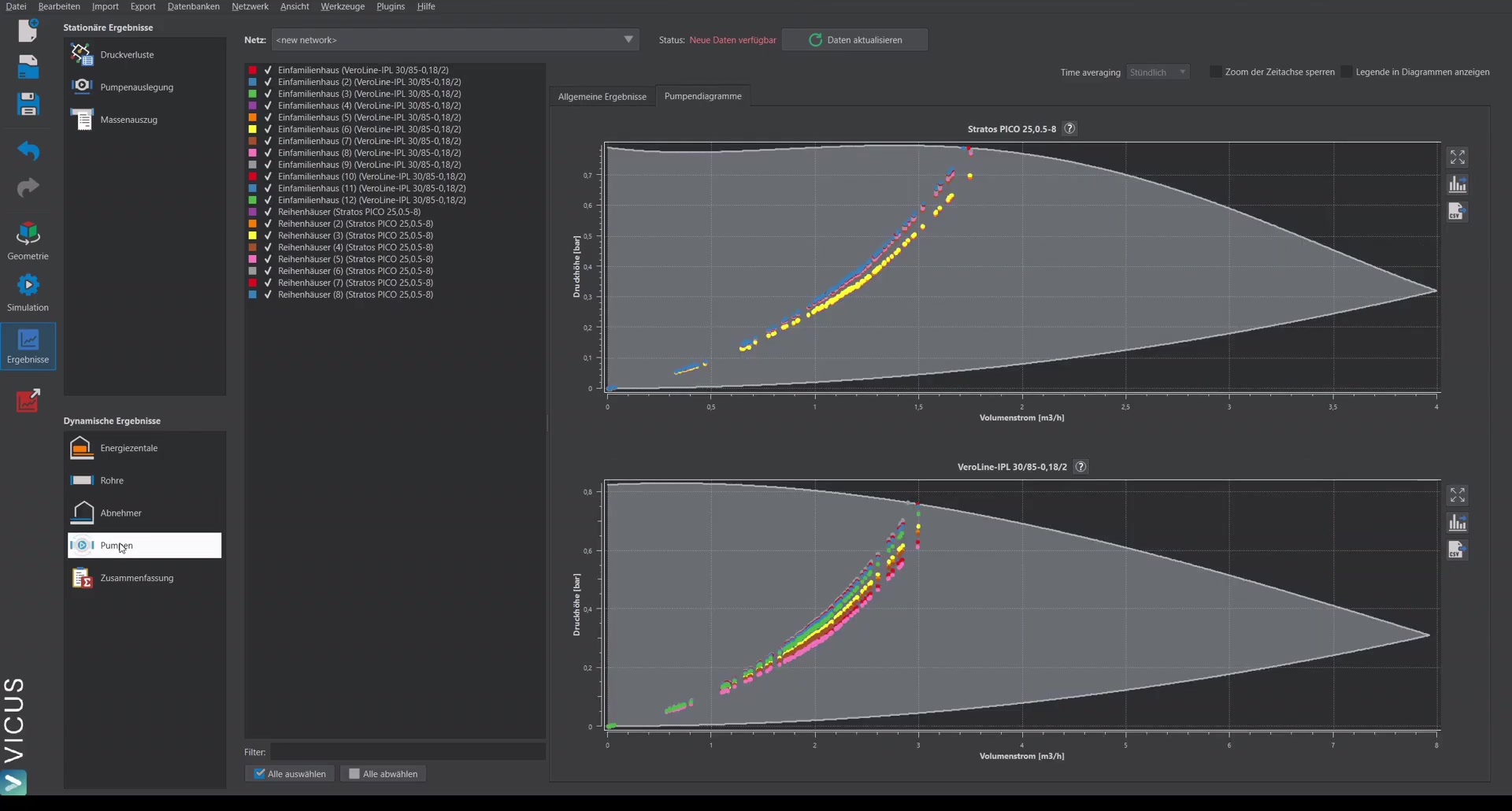
In the Pump diagrams tab, the pump operating points are shown. Because the pumps regulate on a temperature spread, the operating points move along a quadratic curve (not at constant head). The pumps should operate within their operating range.
Testing the effect of higher pressure losses ▶ 3:46
To evaluate the effect of higher pressure losses, the manifold pressure loss in the probe field can be increased, for example:
- Open the system editor via Databases > Systems.
- Edit the probe field and set the manifold pressure loss to, say, 0.25 bar.
- Run the simulation again.
Evaluating the impact ▶ 4:28
With increased pressure losses, the following is observed:
- The temperature difference is slightly exceeded (above 3 Kelvin) because the pumps reach their limits.
- The operating points move at most along the pump curve.
- A lower mass flow than required results, which manifests as a higher temperature difference.
This effect demonstrates the correct feedback of the installed pump on the network in the dynamic simulation. For a passive network, it is important to carefully match the pump capacity to the network pressure losses.