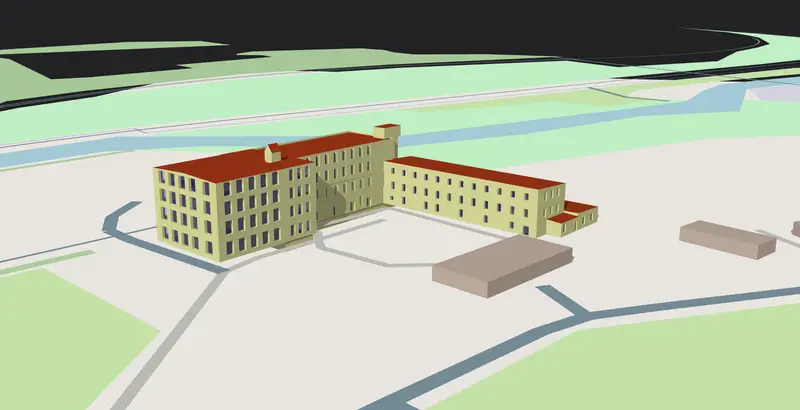
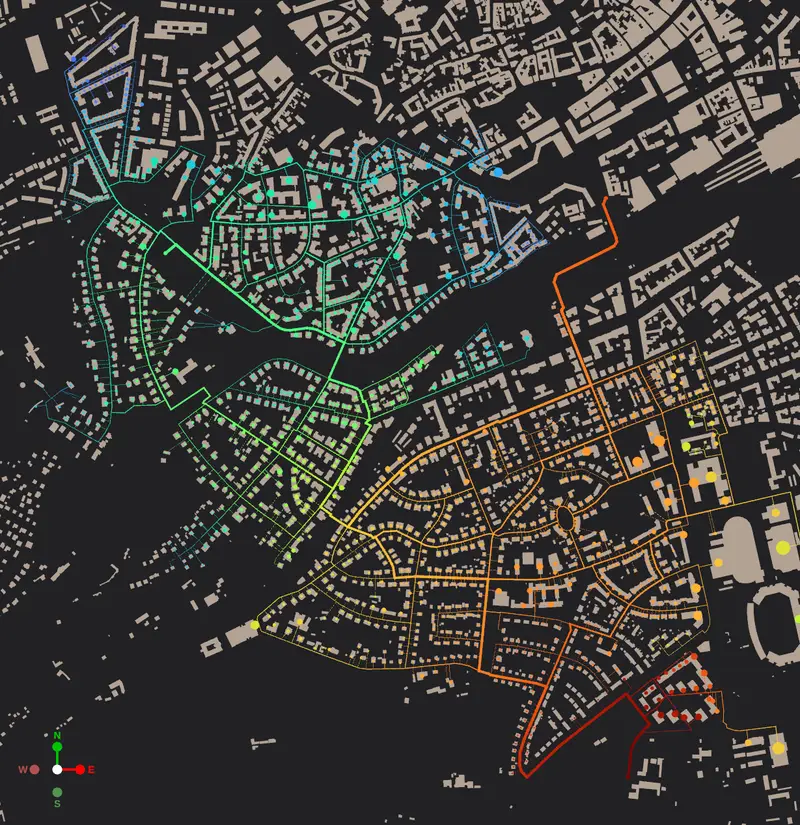
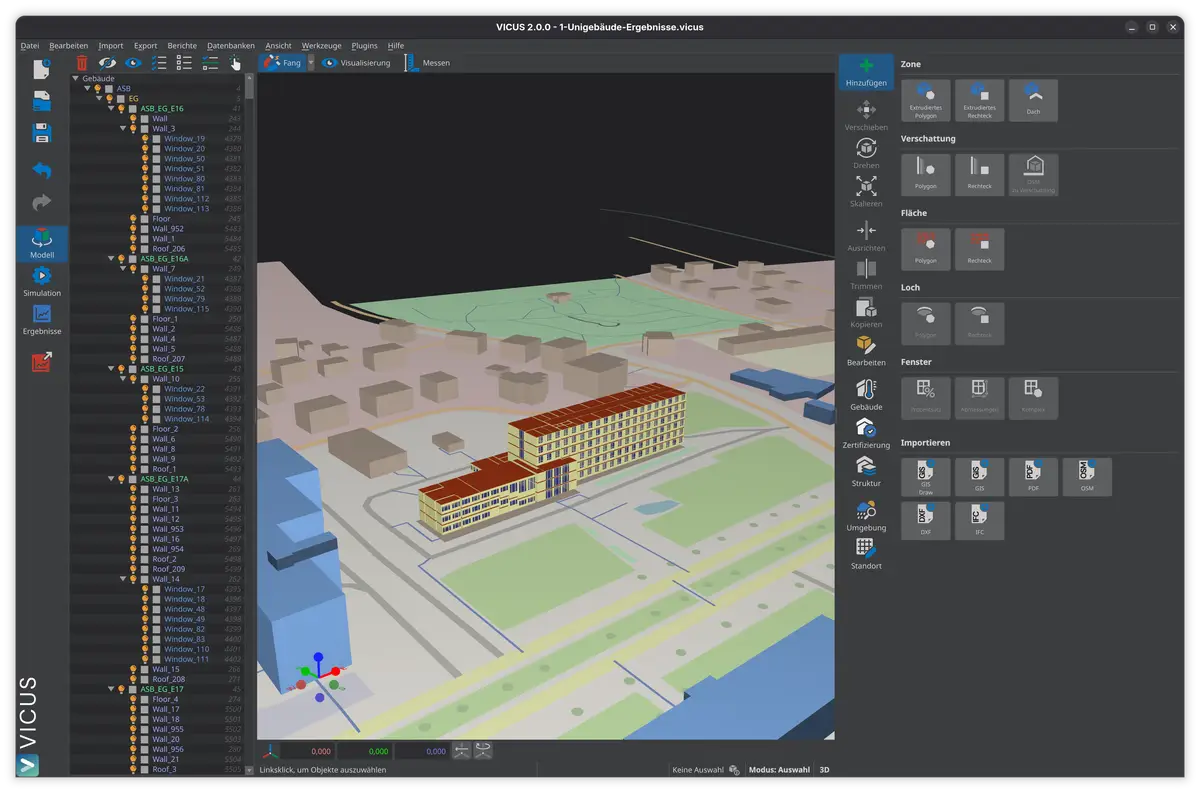
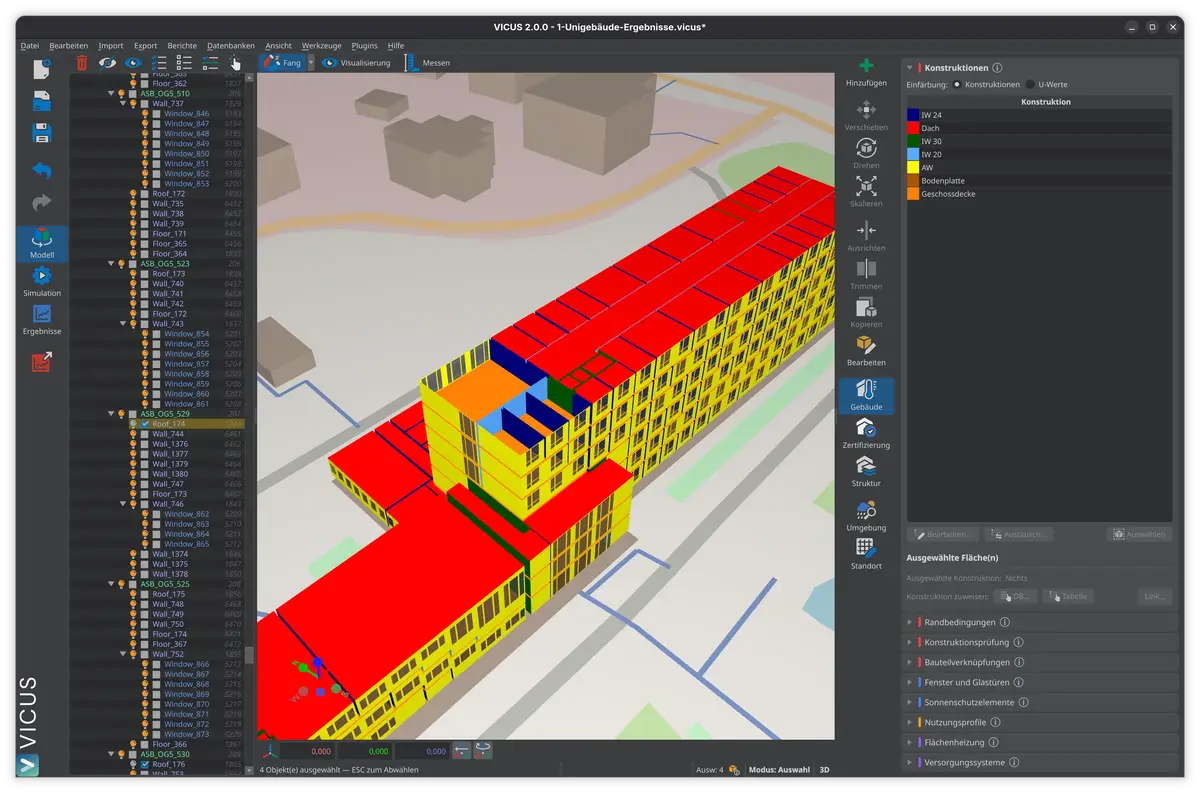
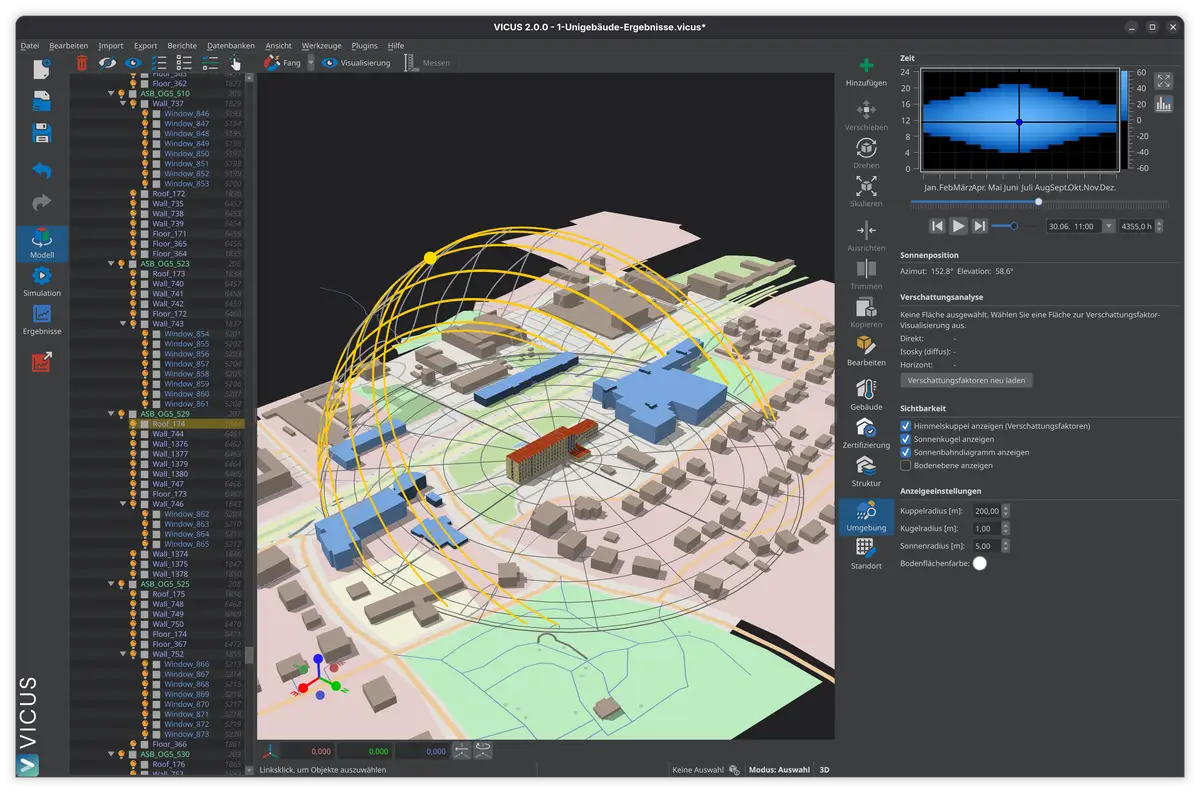
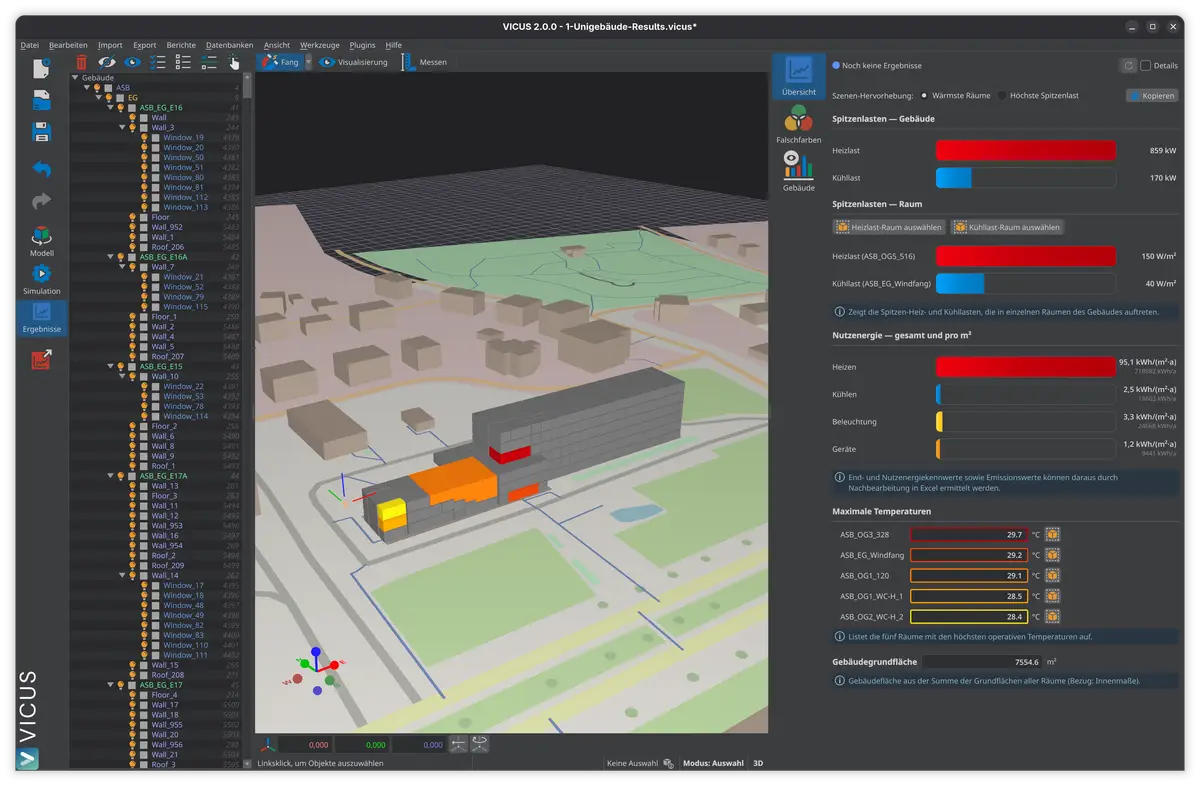
Plan heat networks.
Simulate buildings.
In one tool family.
Well-founded planning and simulation in an intuitive interface. For planning offices, utilities and energy providers.

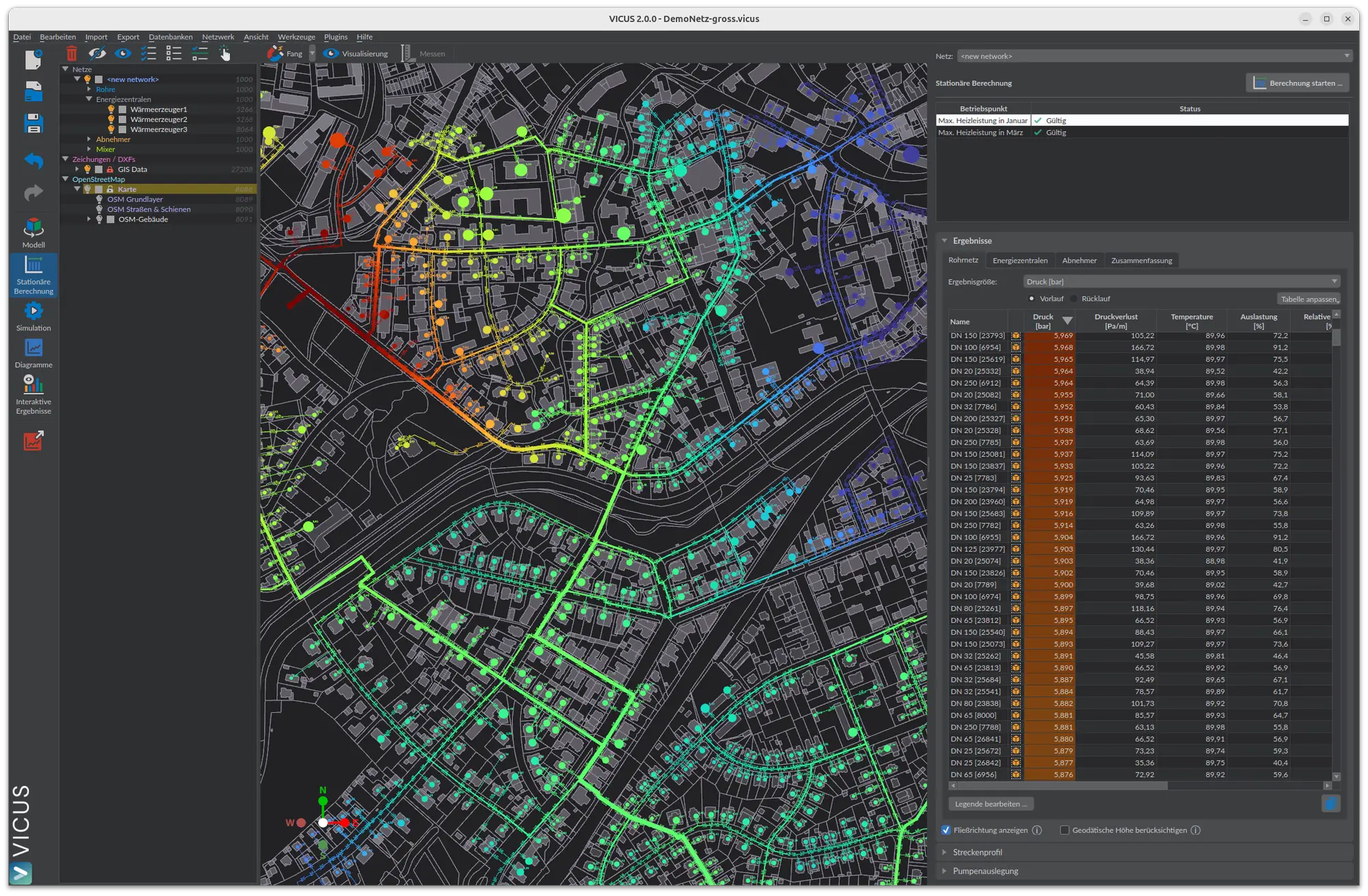
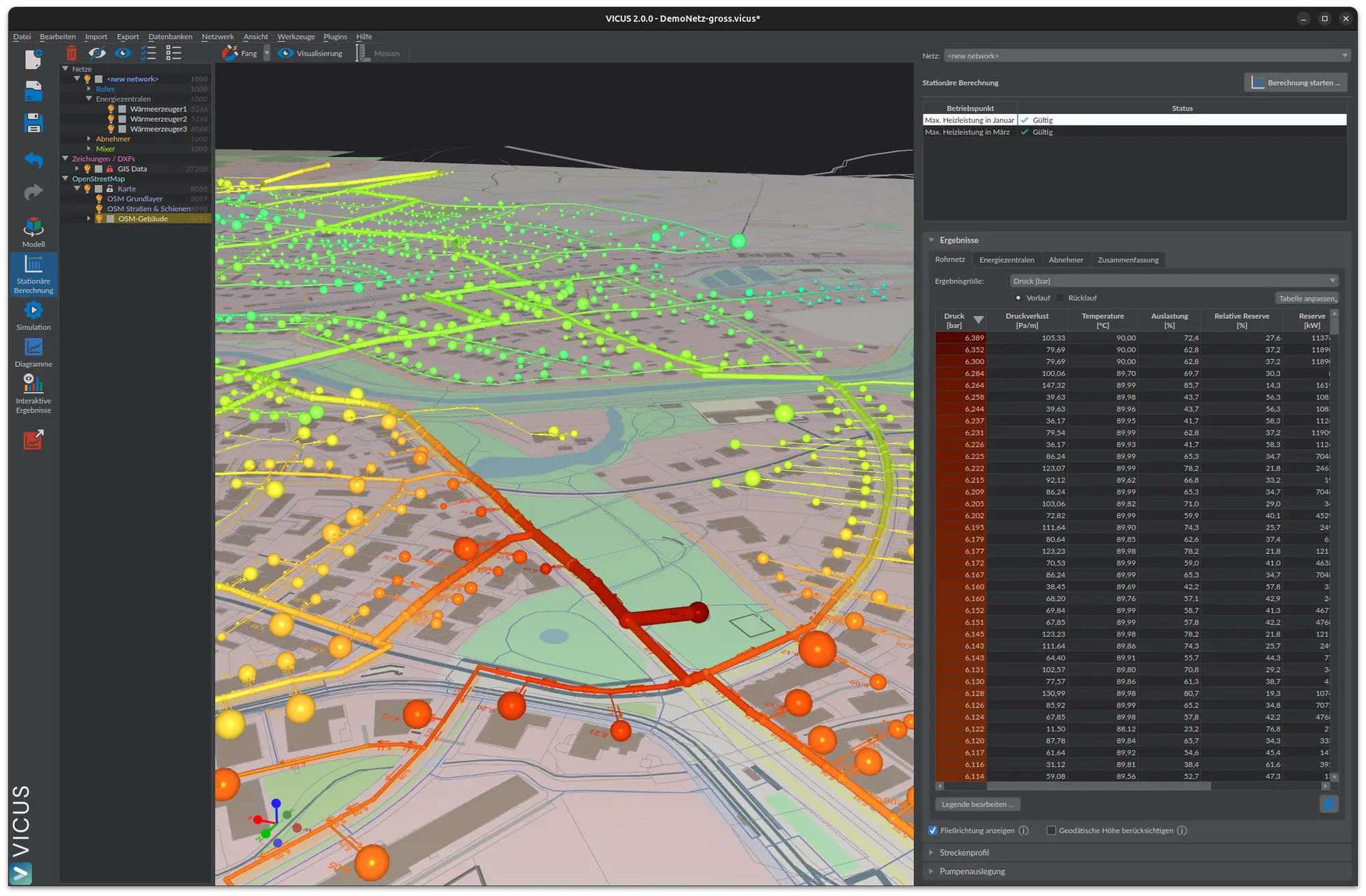
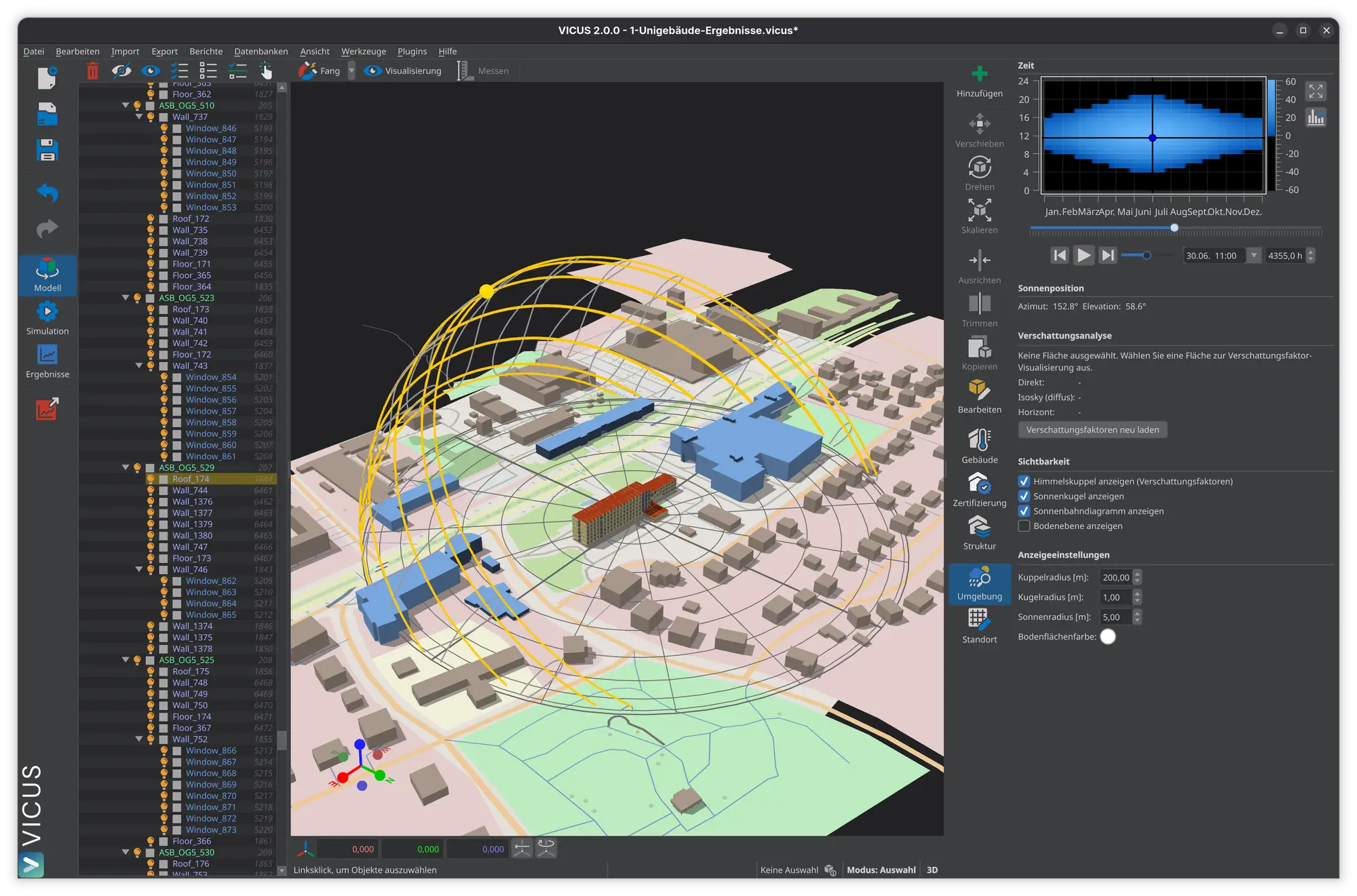
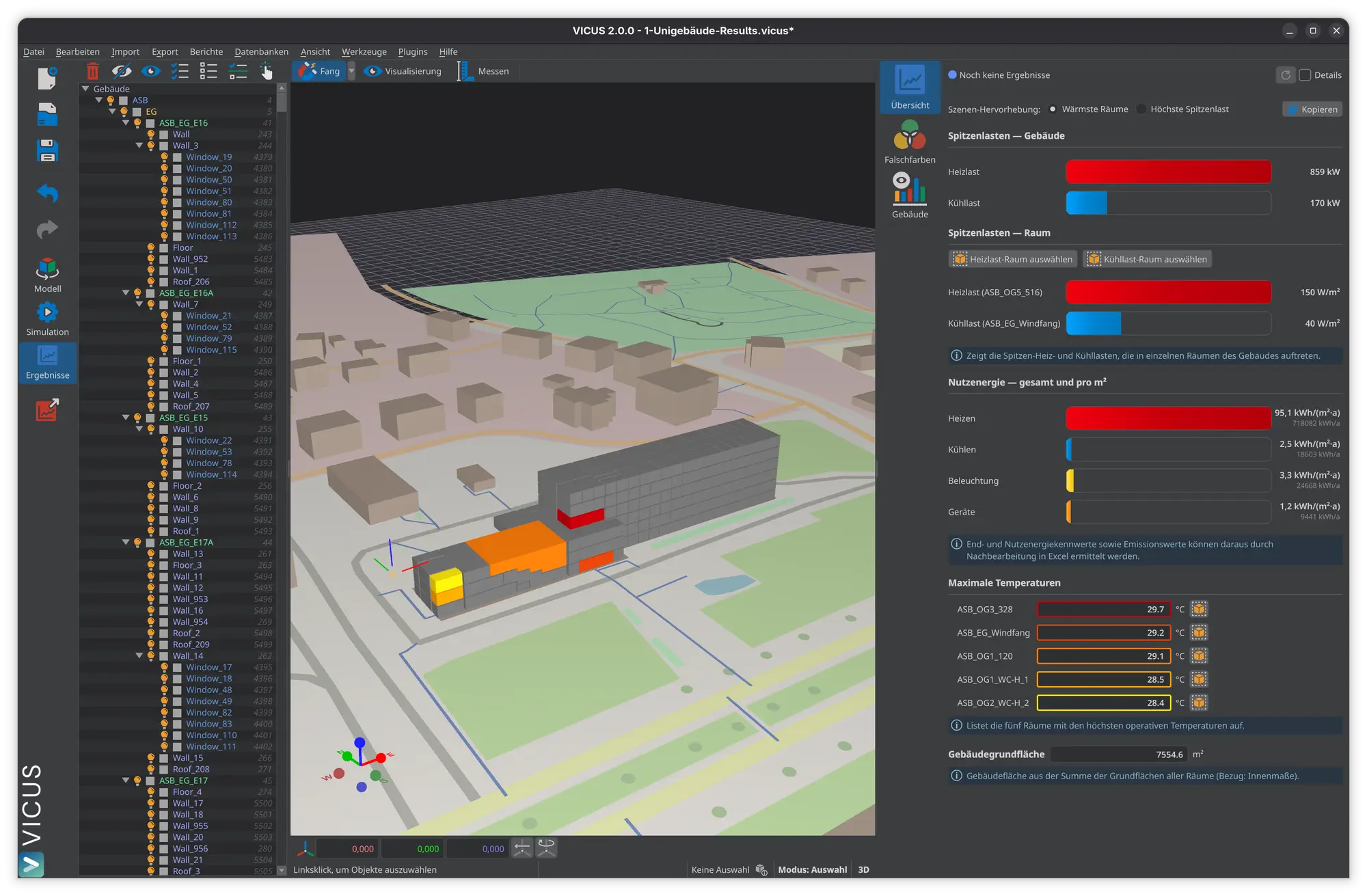
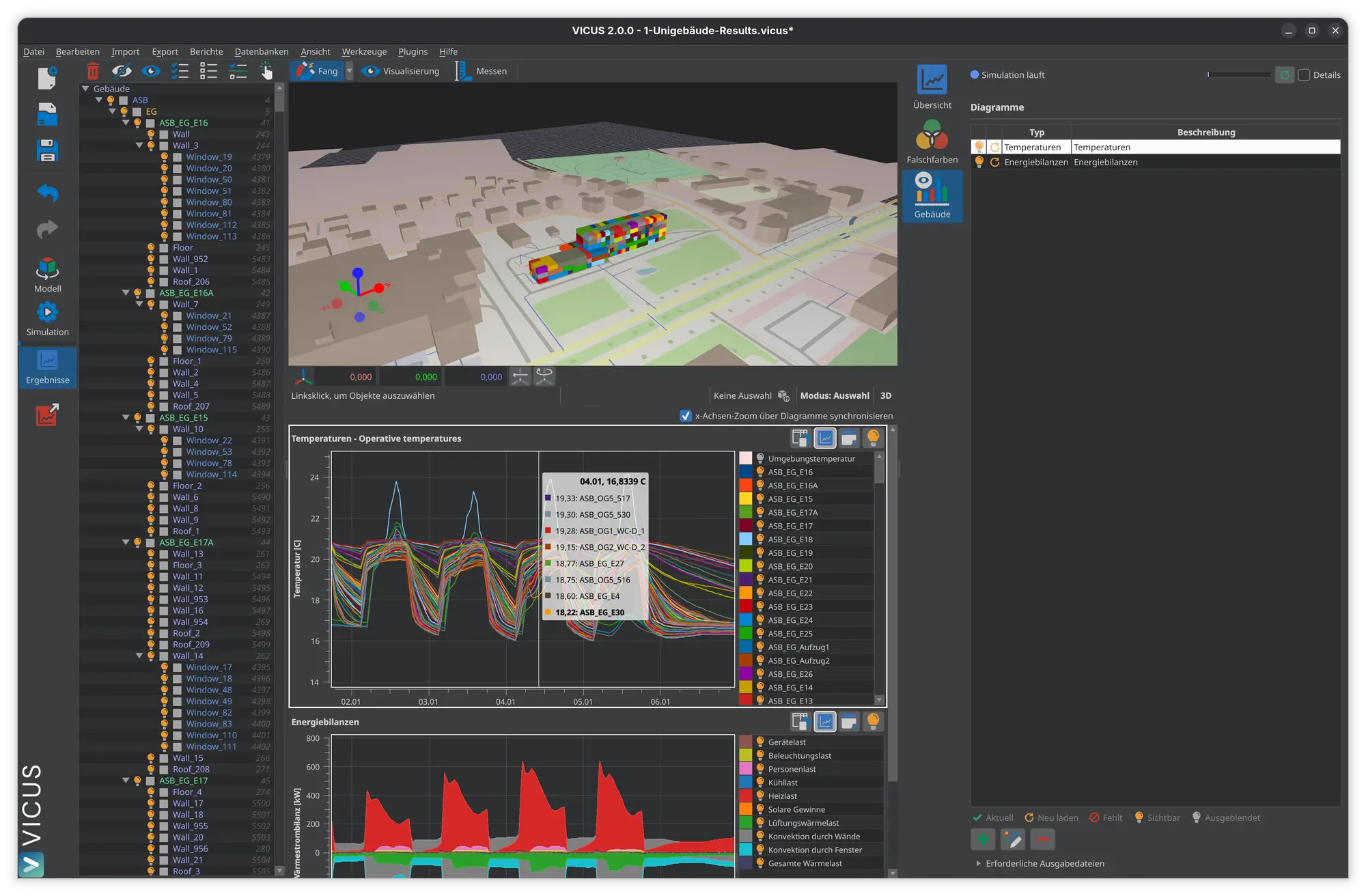



One year, computed hour by hour
A static design gives a single peak value – usually heavily oversized. VICUS computes every time step and reveals the real load profile across the whole year.
Our Software
Professional tools for sustainable planning and simulation.
 Beta now available
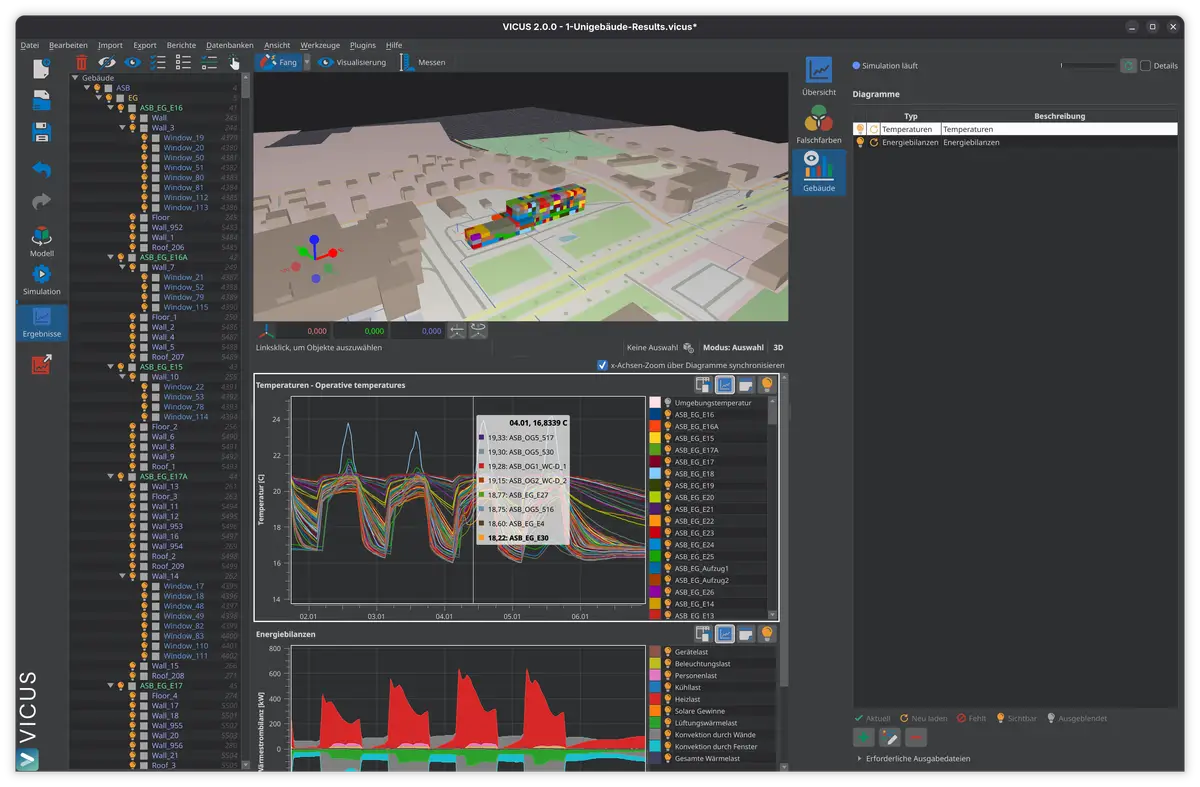
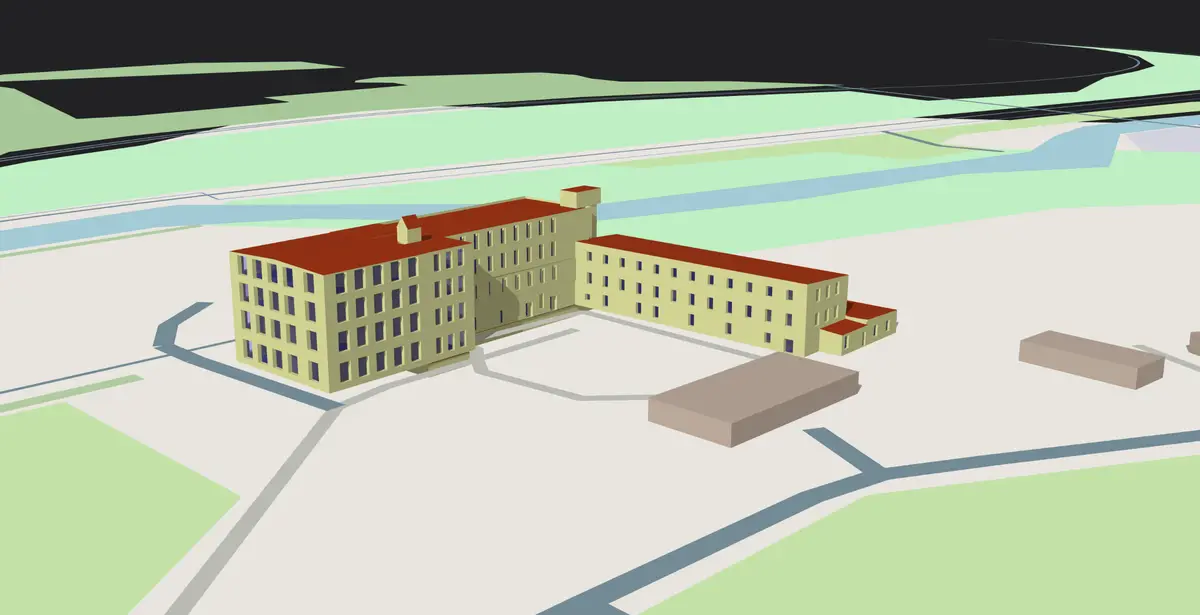
 VICUS BUILDINGS
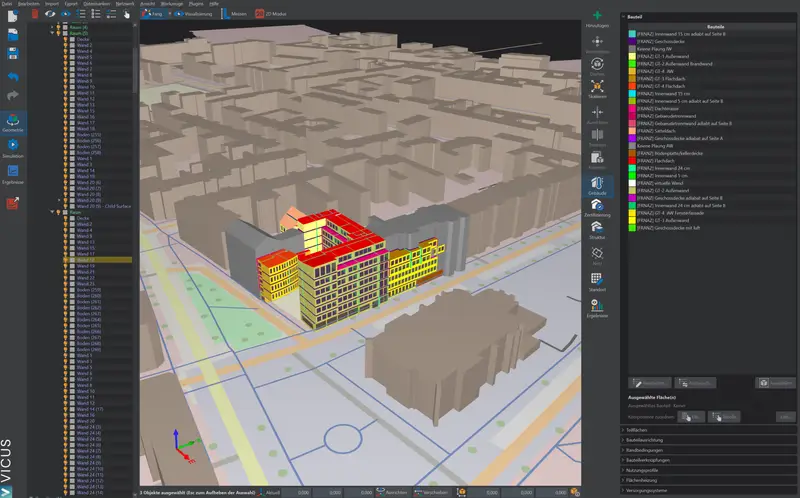
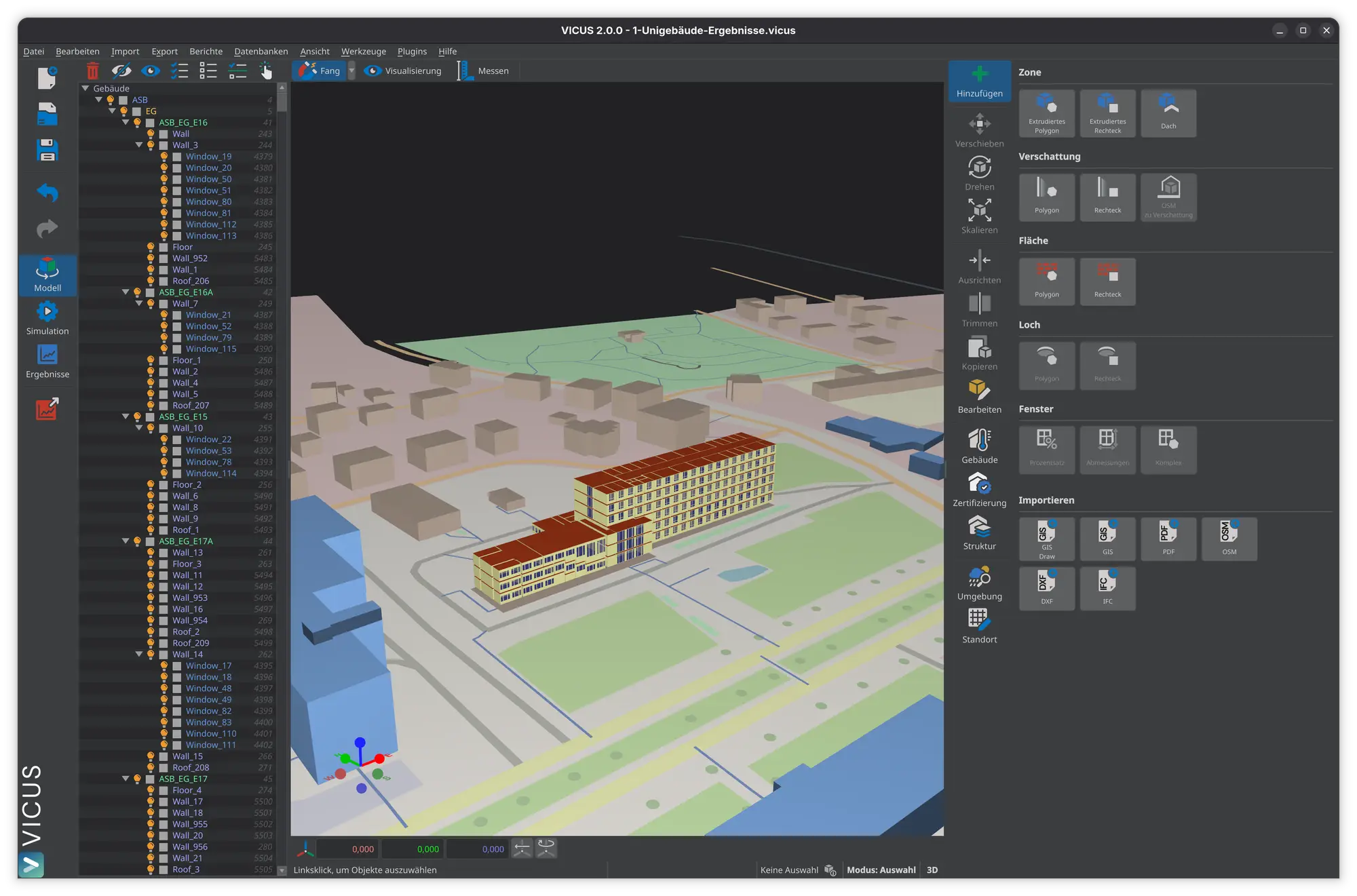
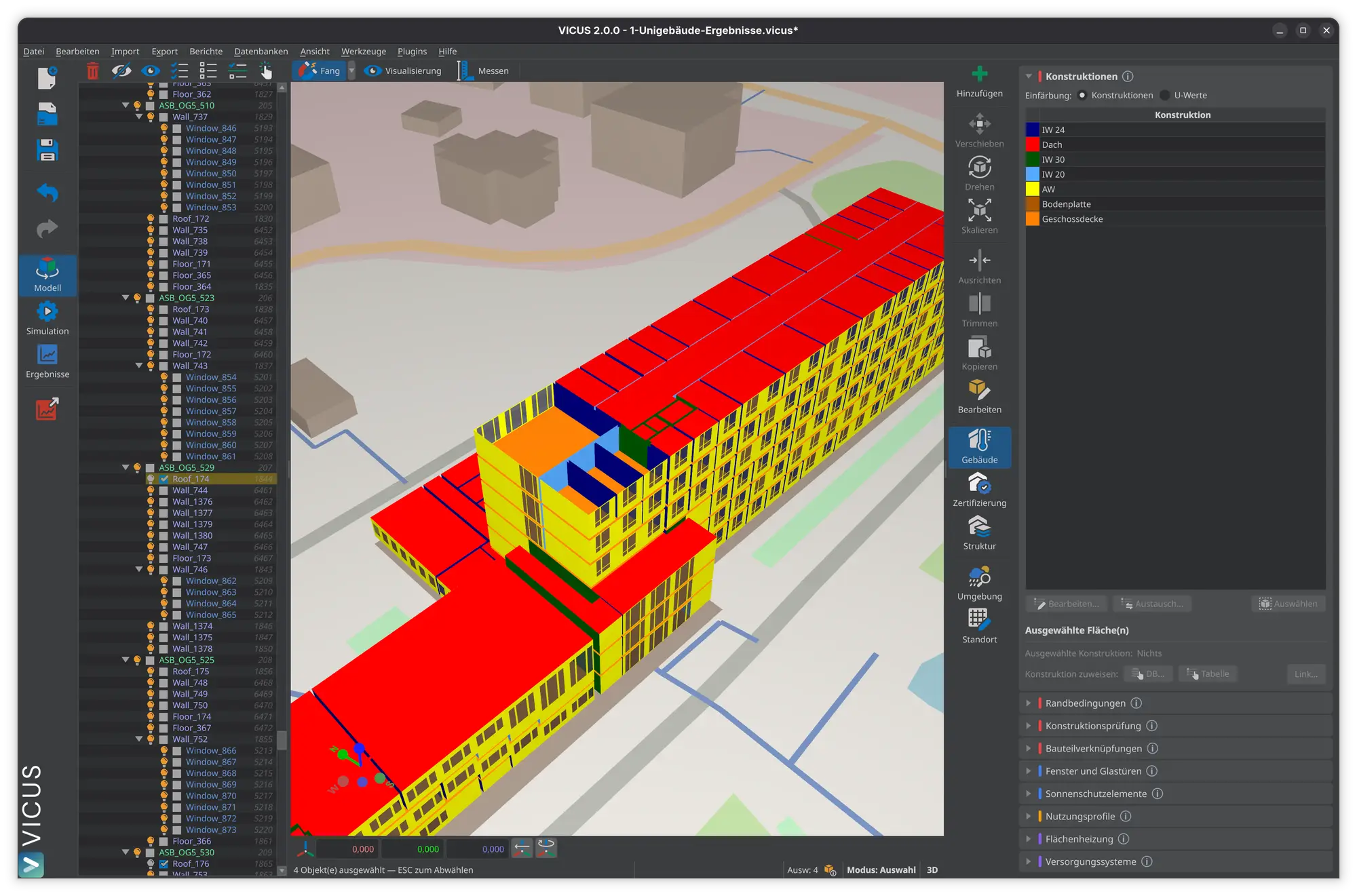
Comprehensive software for energy-efficient building simulation. Analyze thermal behavior, energy consumption, and room comfort.
- Thermal building simulation
- Energy demand calculation
- Comfort analysis
- DIN 4108 compliance
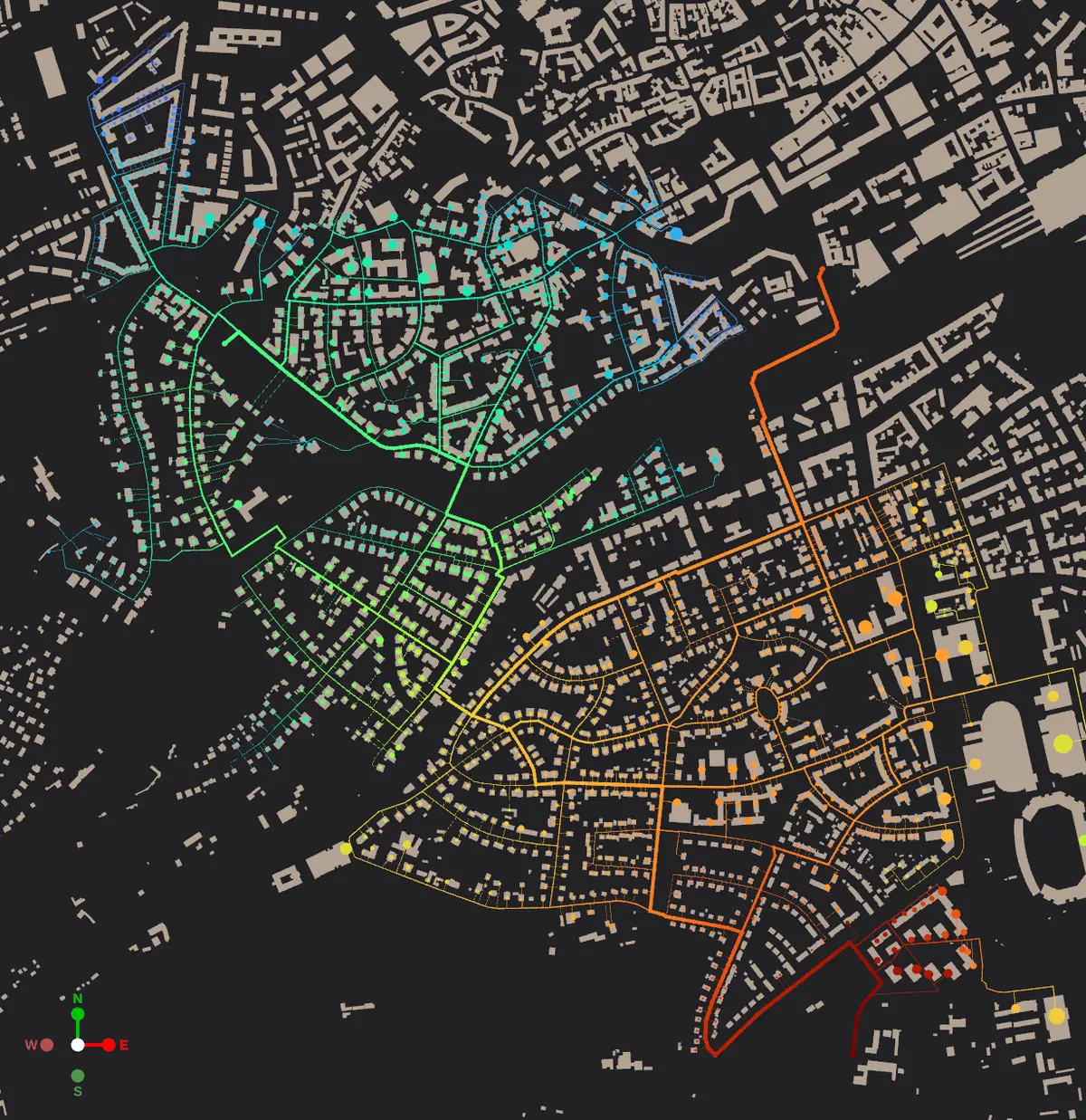
VICUS DISTRICTS
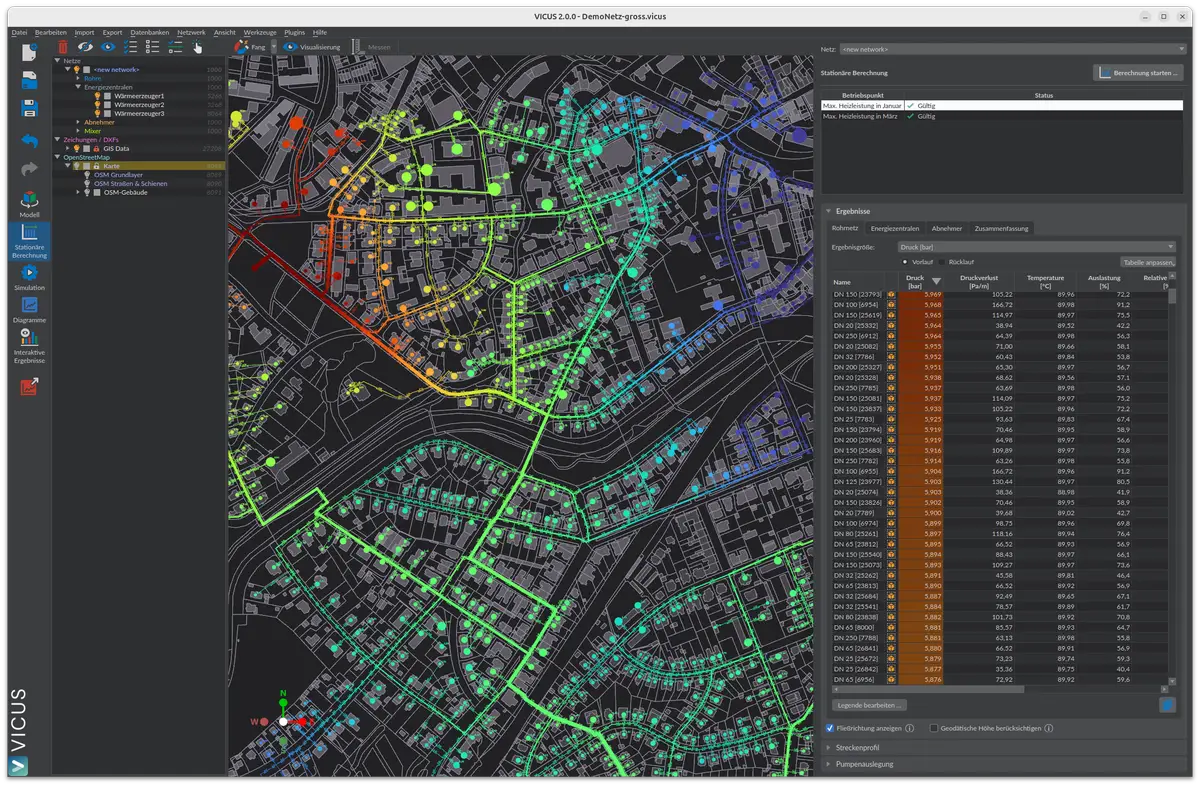
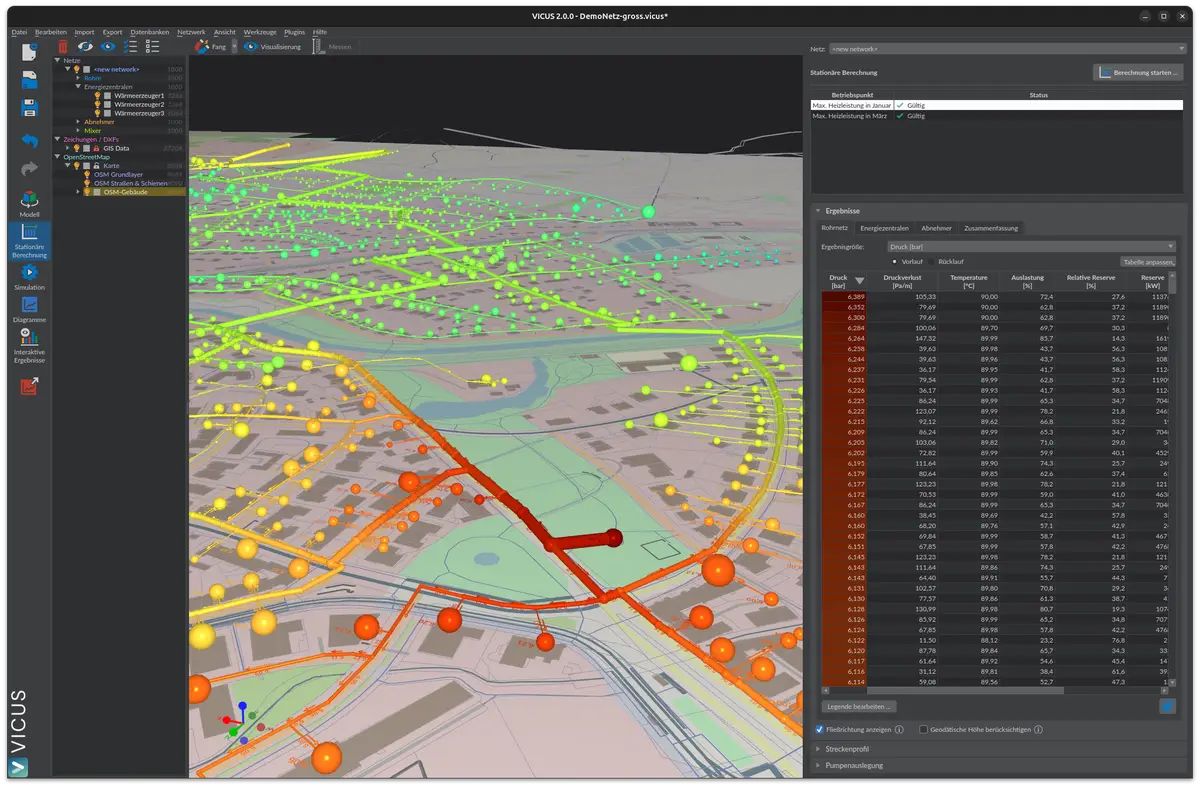
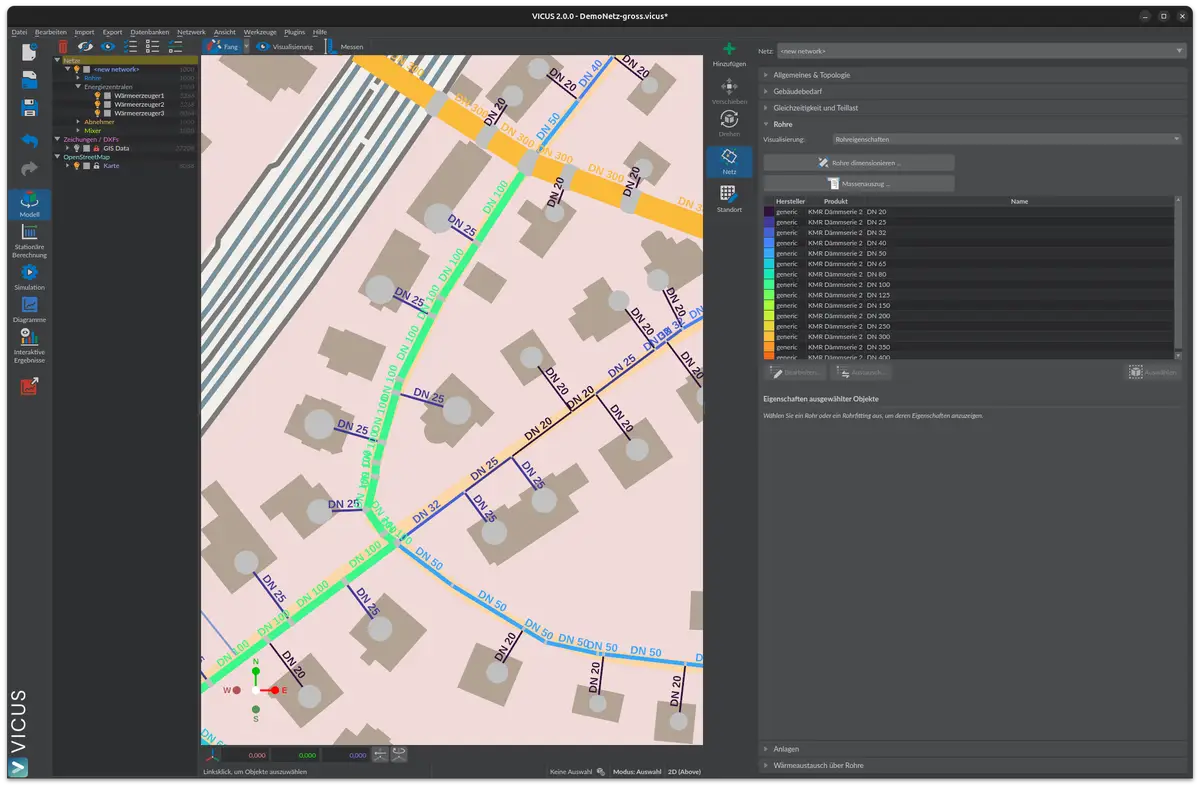
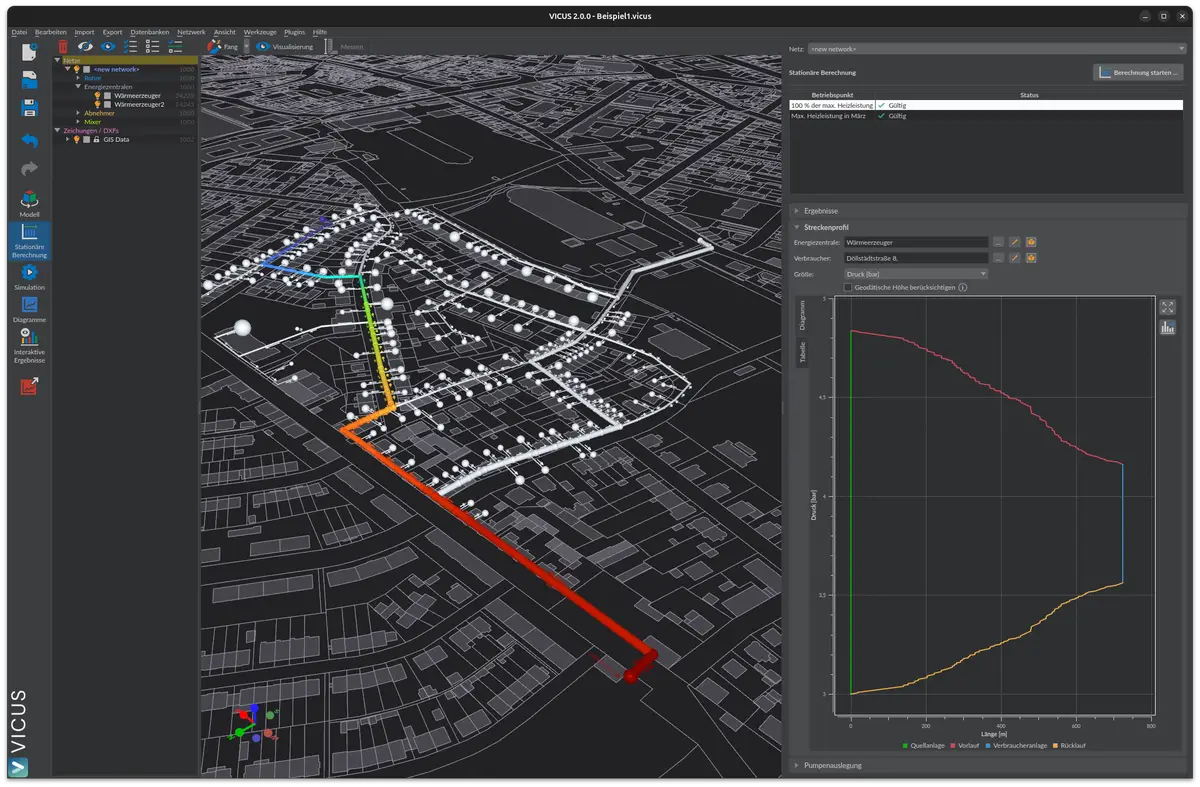
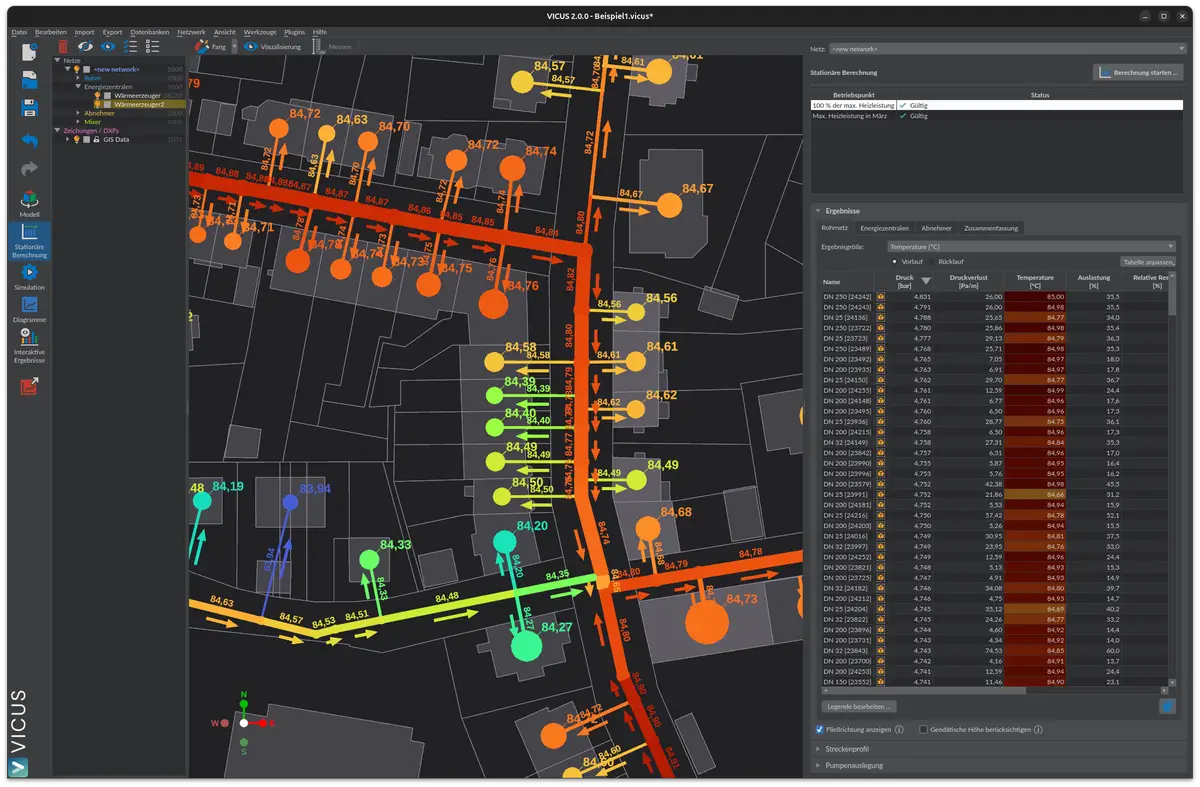
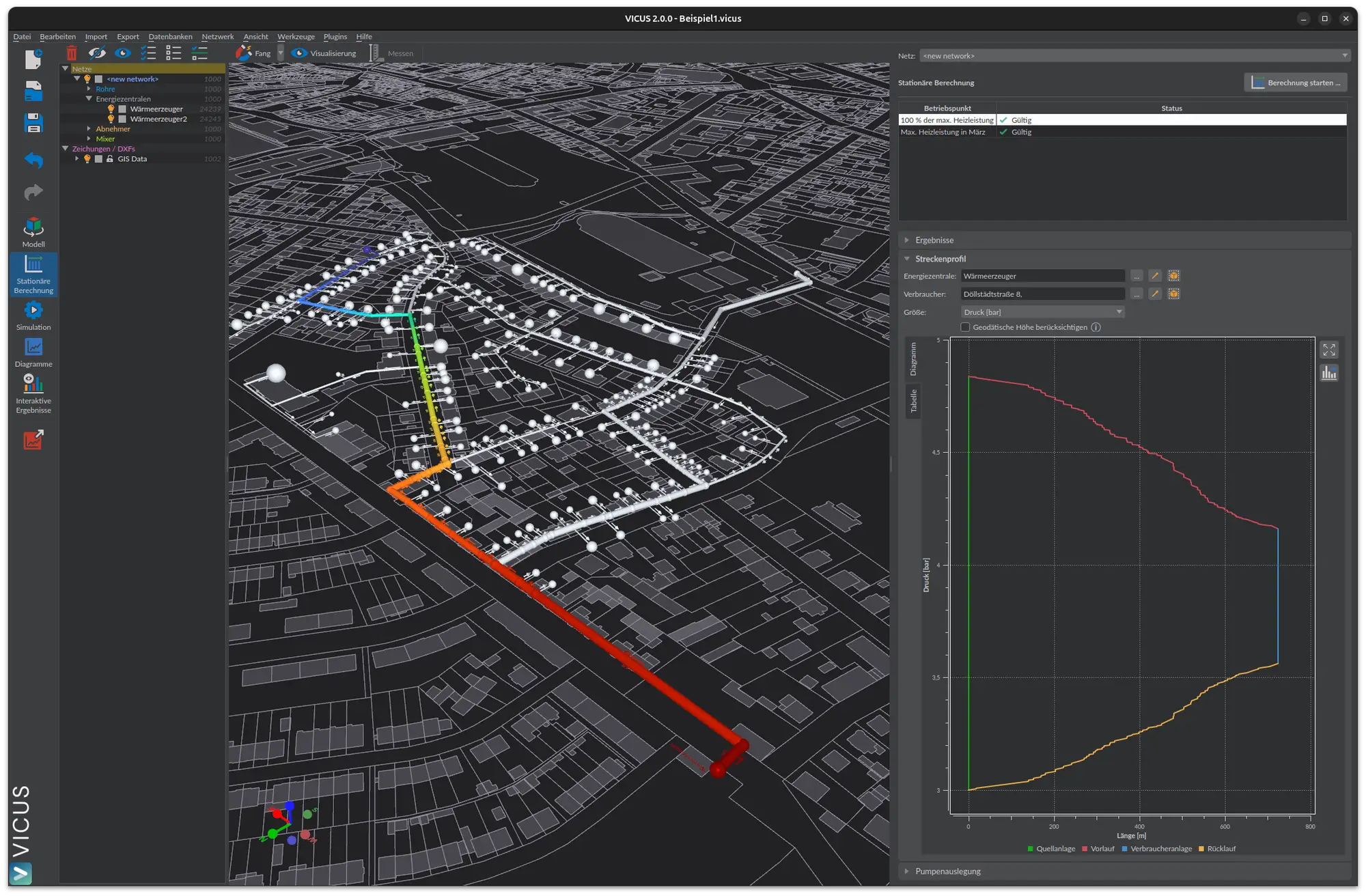
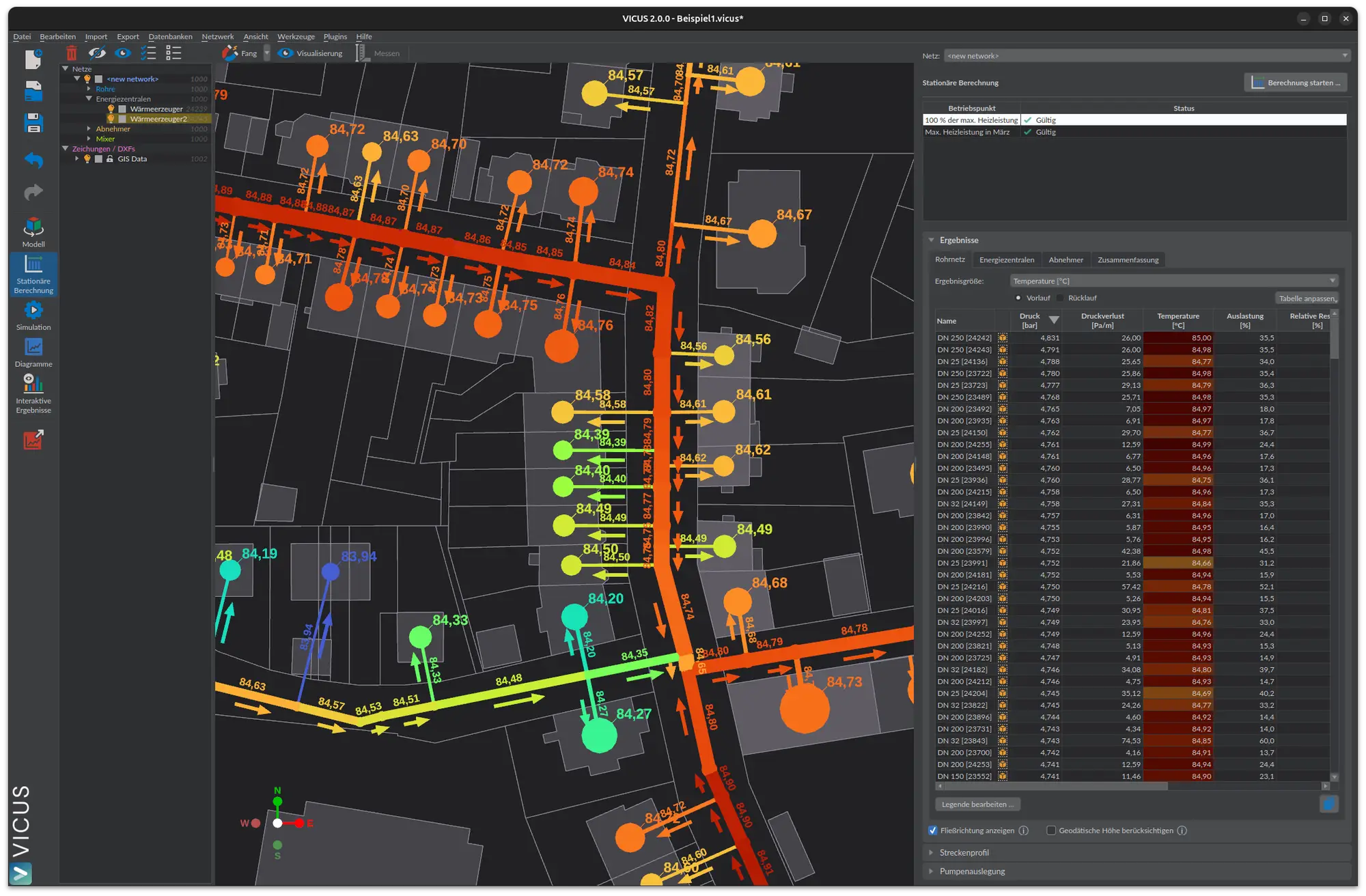
Modern software for planning and simulating heat networks. From cold local heating to large-scale district heating — thermo-hydraulic and precise.
- Heat network planning
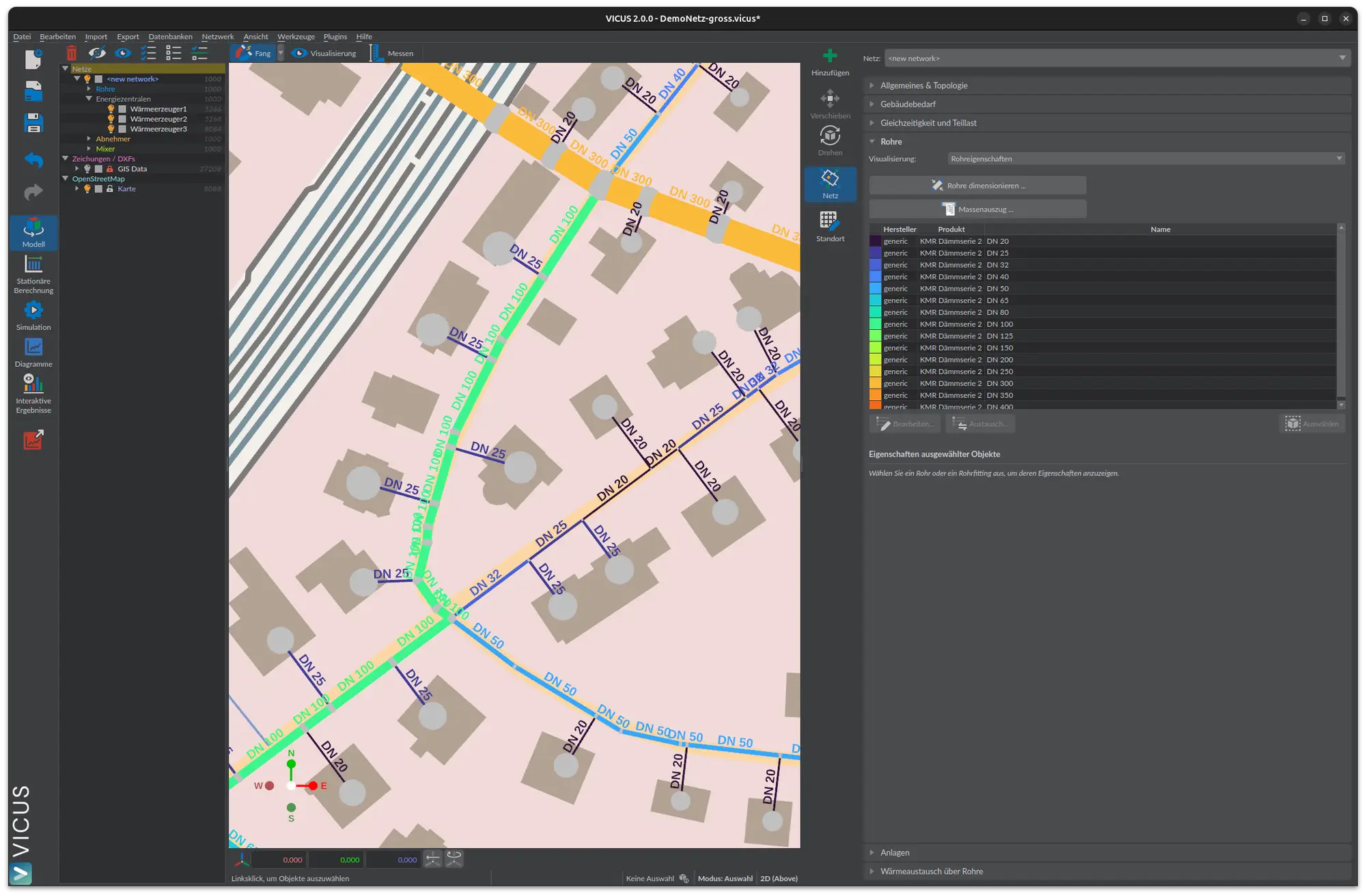
- Network and component sizing
- Thermohydraulic simulation
- GIS integration
Everything for sustainable planning — in one tool family
Our software provides all the tools you need for successful sustainable planning.
Energy Efficiency
Optimize energy consumption of your buildings through precise simulations and data-driven analysis.
Room Comfort
Ensure optimal thermal comfort for building occupants while saving energy.
Sustainability
Plan environmentally friendly buildings and districts with reduced CO2 emissions.
Precise Simulation
Use state-of-the-art thermodynamic simulation models for reliable results.
Heat Networks
Plan and optimize heat networks for efficient district supply.
GIS Integration
Seamless integration of geodata for location-based analysis and planning.
Knowledge for Planners
Technical fundamentals on building simulation, heat networks, economics and funding — from engineers for engineers.
Topics
Popular articles
Dynamic Building Simulation: Fundamentals
Building simulation explained: dynamic vs. steady-state calculation, fields of application, result quantities and software for thermal building simulation.
Read articleDistrict Heating Pipe Sizing: Methods & Criteria
District heating pipe sizing from flow velocity (0.5–2.5 m/s) and pressure gradient (100–200 Pa/m): DN reference values per line type, plus an online calculator.
Read articleHeat Load Demand and Load Profile
How is the heat load demand of a thermal network determined? Load curves, annual load duration curves and full-load hours
Read articleBEW Funding – Key to Climate-Neutral Heat Supply
Everything about the German federal funding for efficient district heating networks: requirements, rates and application
Read articleLow-Temperature District Heating: Fundamentals
Cold district heating (5GDHC) explained: operating principle, heat sources, decentralized heat pumps and network hydraulics of 5th-generation networks.
Read articleDigital Twin and Monitoring
Operations monitoring, active load management and digital twin: Digital tools for the optimization of thermal networks
Read articleLeading companies trust VICUS
Together for sustainable solutions










What Our Customers Say
With VICUS Districts we were able to precisely determine the heat gains of our low-temperature network — and prove that the project is economically viable compared to insulated networks.
The steady-state analysis capabilities and the detailed ground model are unique. We haven't found anything comparable in any other software.
Digitizing existing pipe systems is one of the biggest challenges for utilities. VICUS Districts is a supertool for that!
Digital twins and simulations are essential for efficient heating networks. VICUS Districts opens up entirely new perspectives for us and network operators.
VICUS Districts is now our standard tool at tewag. It convinces us with its intuitive usability, high flexibility and the dynamic coupling of components.
Frequently asked questions about VICUS
Answers to the questions our users ask most often.
Ready for Sustainable Planning?
Contact us for a personal demo or download the software directly.

Dr. Christoph Morbitzer
Your Contact Person